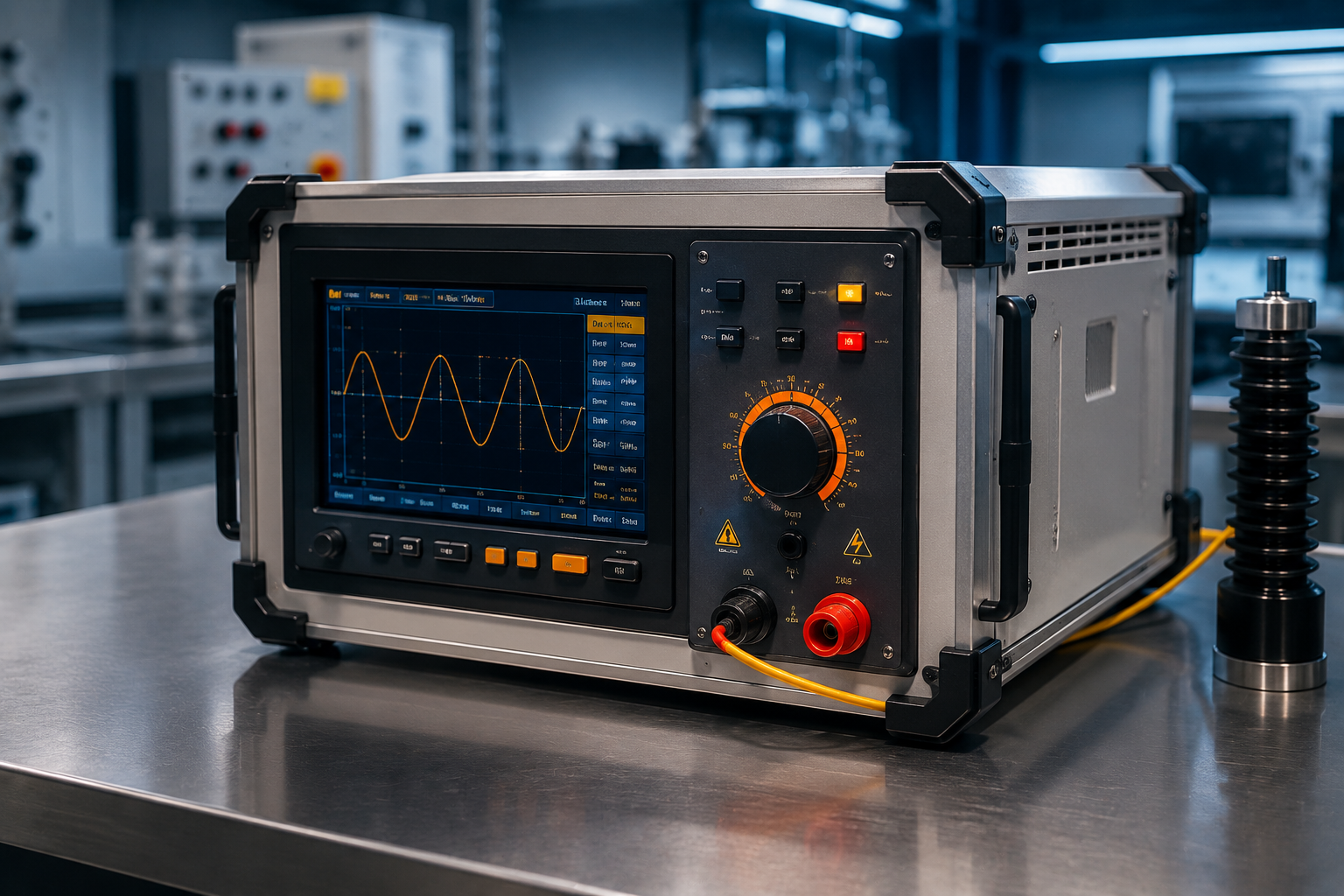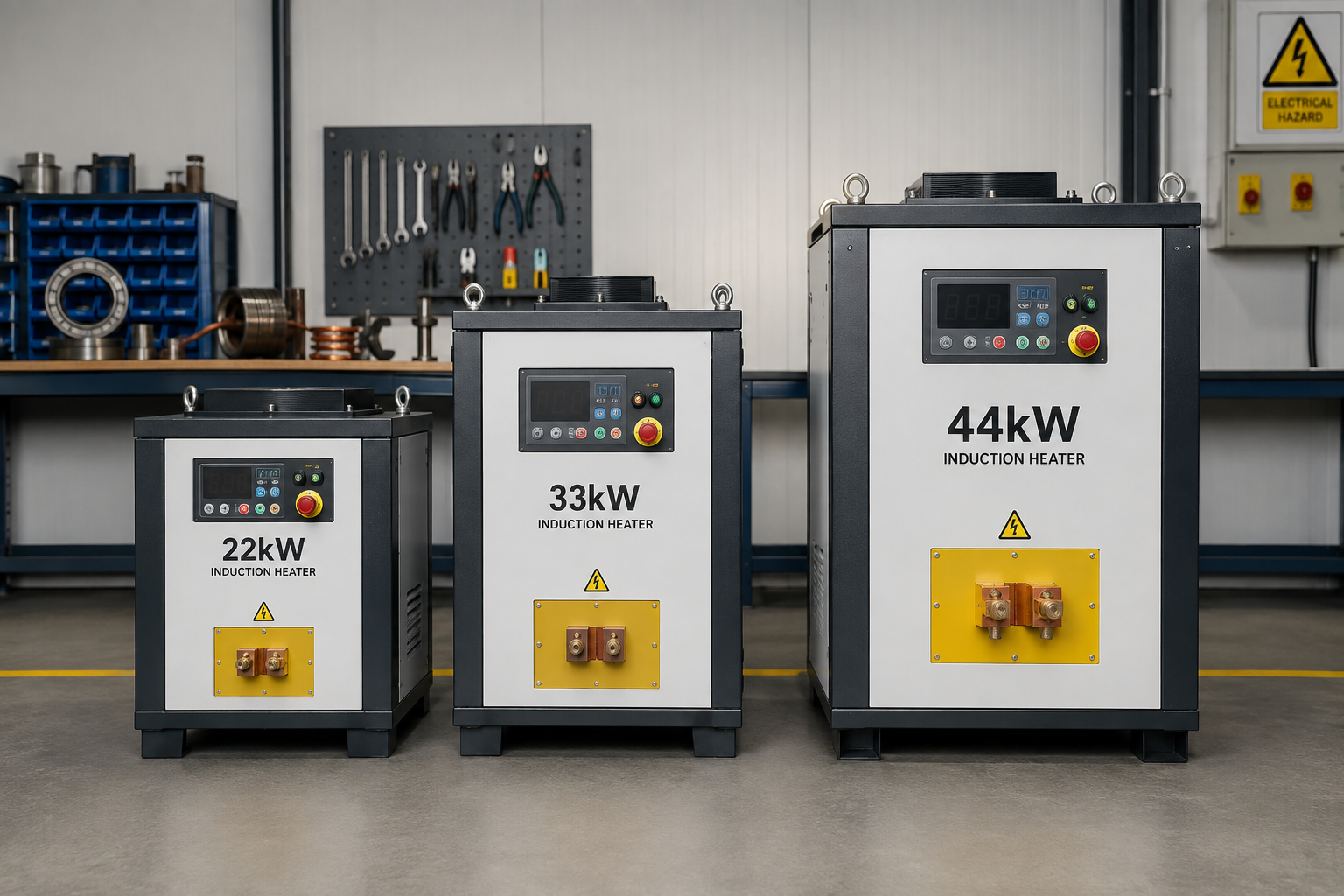

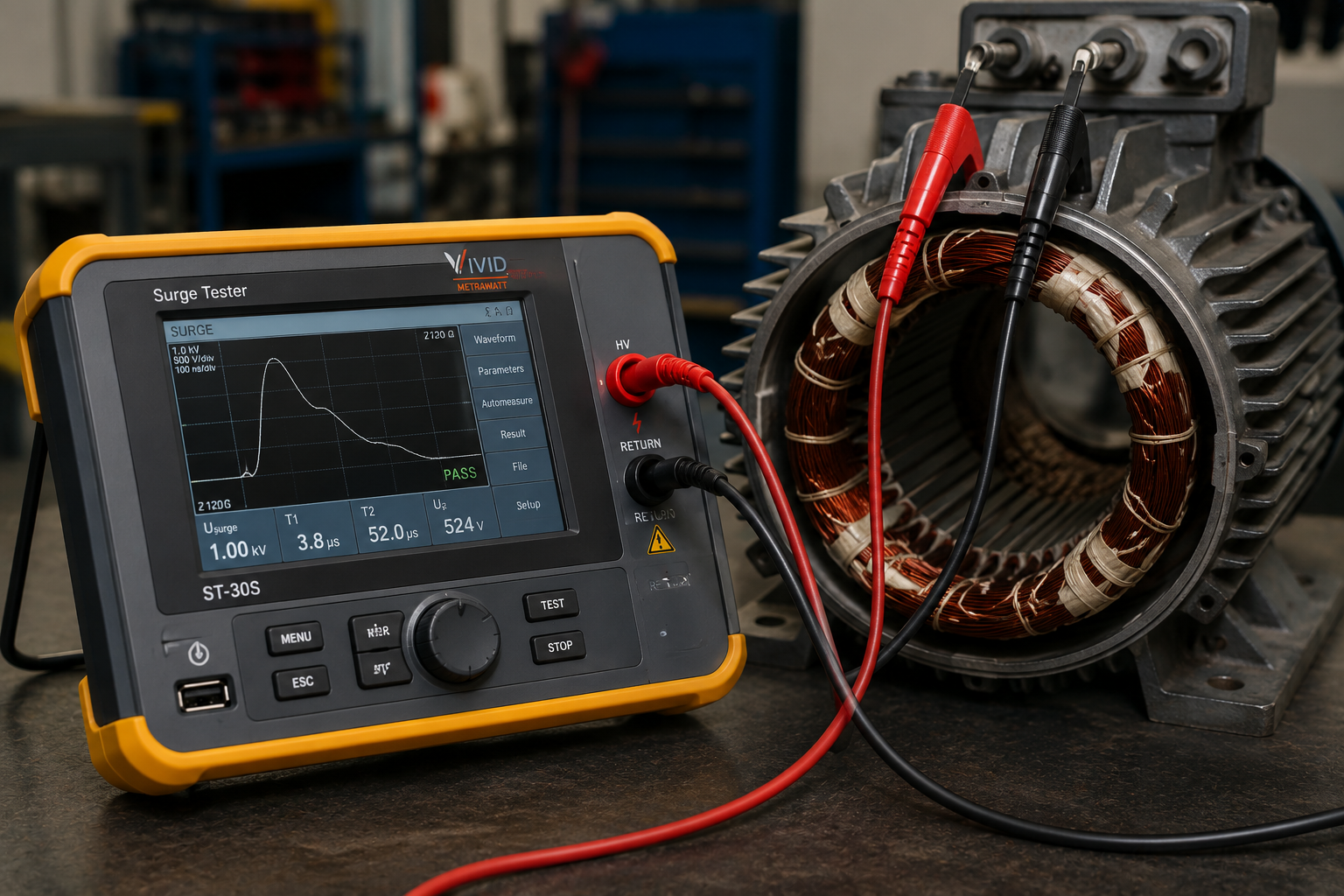
A motor that fails in the field rarely fails without warning — the warning was just never tested for. Winding insulation breaks down slowly, one weak turn at a time, until a surge of load current finds the weak point and the motor drops out mid-shift. That’s downtime, a rewind bill, and, in production environments, a line stoppage that costs far more than the test would have. A surge tester for motor winding testing is the one instrument built specifically to catch that weak turn before it becomes a failure. This guide walks through how surge testing works, how to run it correctly, and how to pick the right tester for your winding sizes.
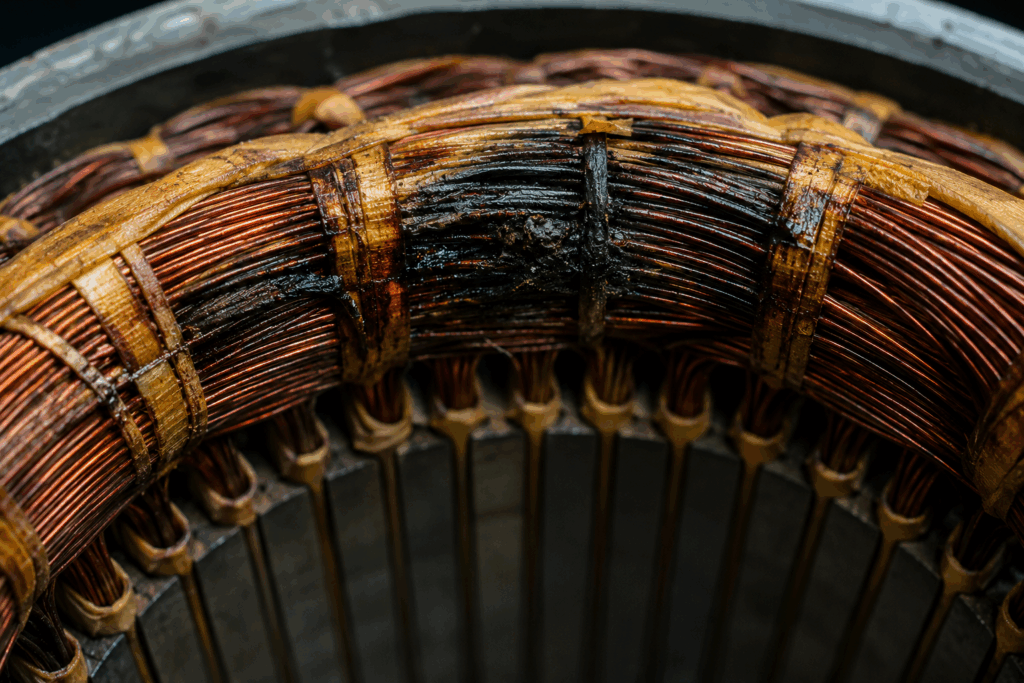
Motor winding failure rarely happens overnight. It builds through heat cycling, vibration, contamination, and voltage stress until insulation between adjacent turns breaks down. Our detailed breakdown of motor winding failure signs covers the early warning indicators most maintenance teams miss.
Left undetected, a single weak turn under a surge event can cascade into full winding failure within seconds. That’s why forward-thinking maintenance programs use surge testing to enhance motor reliability and efficiency as a standard incoming-inspection and preventive-maintenance step, not just a failure post-mortem.
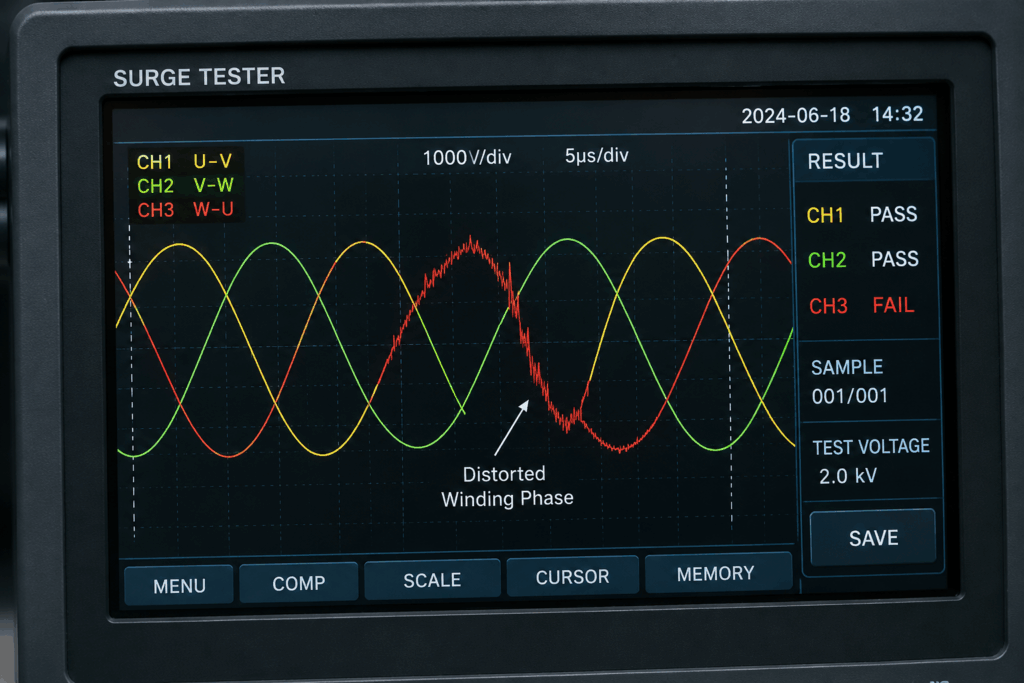
A surge tester applies a fast-rising, high-voltage impulse across a winding and captures the resulting voltage waveform on a display. Every winding has its own natural oscillation pattern; a weak or shorted turn distorts that waveform in a way a trained technician — or the tester’s own software — can immediately spot.
This is fundamentally different from a resistance check. Our post on surge test vs resistance test explains why resistance alone can’t catch turn-to-turn insulation weakness, and our explainer on how surge generators work goes under the hood of the impulse itself.
Two waveform concepts matter most when reading results:
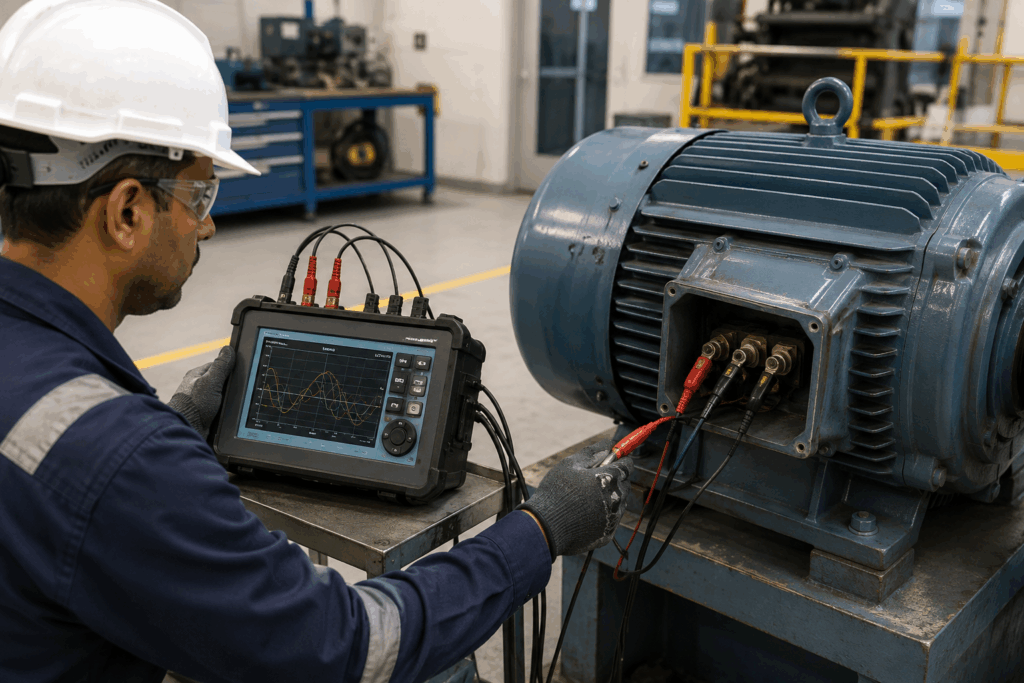
For motor-type-specific procedures, see our step-by-step guides on how to test motor windings, how to test windings on a single-phase motor, how to check the windings on a 3-phase motor, and how to test armature using a surge tester.
If you’re setting up a repeat testing station, our how to use footswitch hands-free surge testing guide is a practical productivity read, and our how to maintain and calibrate your digital surge tester article keeps your readings trustworthy over years of use.
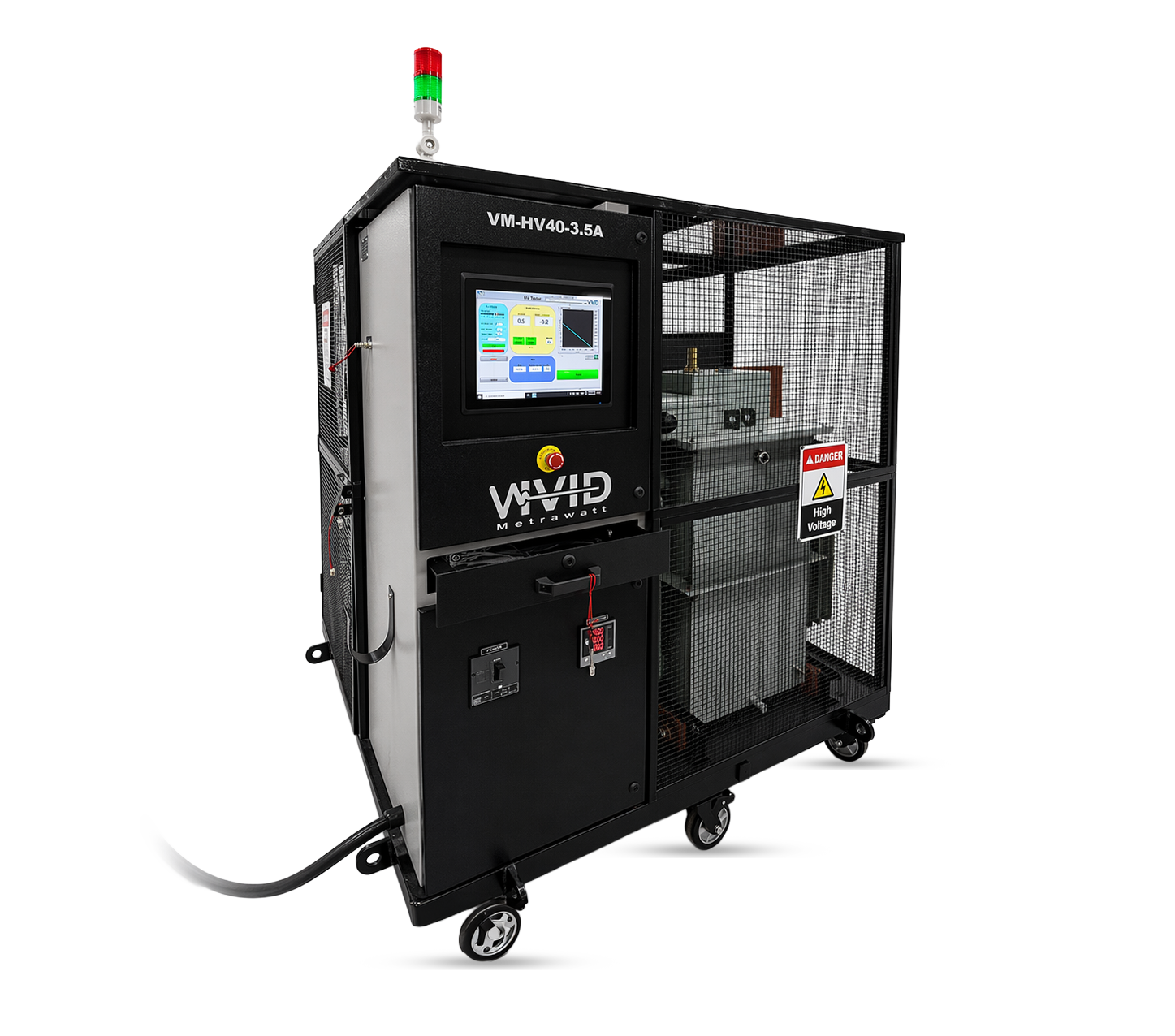
Vivid Metrawatt’s digital surge tester range covers windings from small armatures to heavy generator coils:
For sizing help by winding voltage class, our digital surge tester by KV rating breakdown is the fastest way to match a model to your motor fleet. If your work spans HVAC specifically, our best surge tester for HVAC motor testing post narrows it further, and our what is a generator surge tester guide covers large rotating equipment.
Surge testing is one part of a complete winding-health program, not a replacement for every test:
Running into inconsistent readings? Our troubleshooting common surge tester errors and broader troubleshooting electrical testing errors guides cover the most frequent operator mistakes.
Before you buy, work through our choosing the right surge tester for your needs: key considerations checklist, and weigh the measurable benefits of using surge testers against your current failure rate. Key questions to answer:
No, when used at the correct rated voltage for that winding class. Over-voltage testing on the wrong KV range is the main risk — always match tester rating to motor spec.
Both. Incoming inspection of new or rewound motors catches manufacturing defects before installation, while periodic testing catches insulation degradation over the motor’s service life.
Surge testing focuses specifically on turn-to-turn insulation via waveform comparison, while motor circuit analysis and electrical signature analysis look at a broader set of electrical health indicators. Many teams use both together.
No. Surge testing can typically be performed on an installed winding without teardown, provided it’s electrically isolated first.
Motor winding failures are expensive precisely because they’re preventable. A surge tester gives maintenance and quality teams a fast, non-destructive way to catch the exact fault that resistance checks and visual inspection miss — a weak turn under insulation stress. Whether you’re testing small armatures on a 1KV unit or heavy generator windings on a 50KV system, the principle stays the same: match the tester to the winding, run the test consistently, and treat every distorted waveform as an early warning worth acting on.
Vivid Metrawatt’s engineers will match a surge tester to your exact winding voltage class and testing volume — no guesswork, no over-buying.
Talk to Our Testing Experts →