

Last updated: November 2026 | Reading time: about 10 minutes
Your product passed every earlier check, then the hi-pot tester flashes FAIL. Scrap it, rework it or retest it? Guess wrong and you either ship a hidden insulation fault or lose hours chasing a phantom. This guide explains what hi-pot test failures really mean, the causes behind them, and a repeatable method to troubleshoot them, so every FAIL ends in a clear decision.
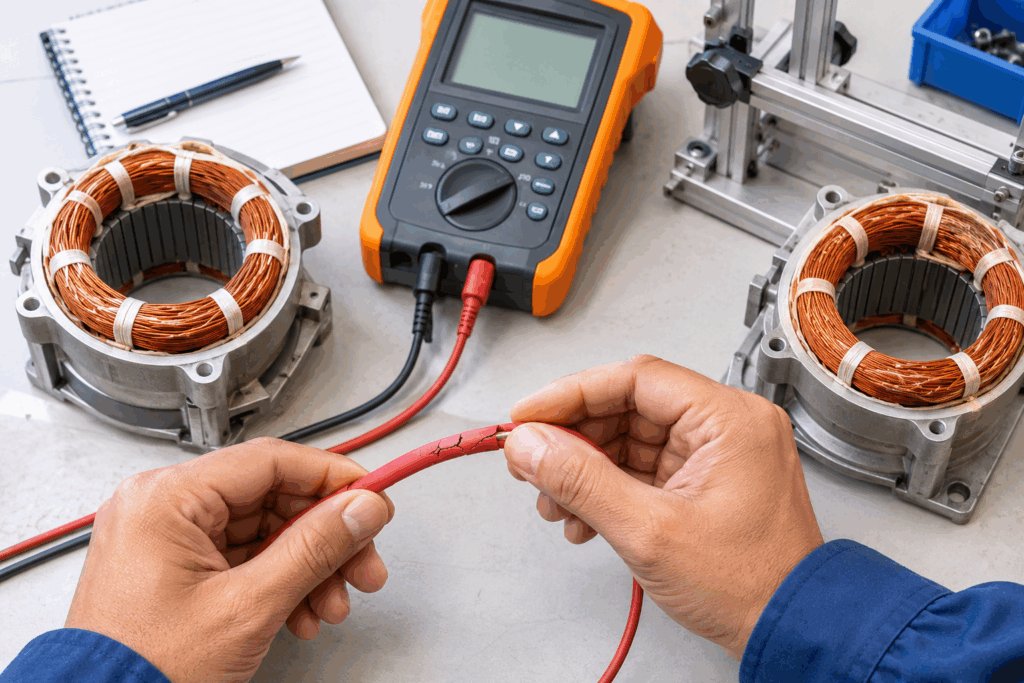
A hi-pot (high-potential) test applies a voltage far above normal operating level to prove the insulation can survive a spike. When the tester shows FAIL, it reports one thing only: a measured value crossed the limit written into the test program. That value could be leakage current, an arc, a full breakdown, or a voltage that never reached its target.
Those outcomes are not equal. A breakdown at the same voltage every time is a defect. A short current spike during a fast AC ramp may just be capacitance charging. A result is only valid when the voltage, ramp, dwell time, current limit and connections match the product standard.
Quick reference (entity, attribute, value):
| Entity | Attribute | Value |
|---|---|---|
| Hi-pot test | Verifies | Insulation withstand under high voltage |
| Leakage current | Indicates | Insulation quality (lower is better) |
| Breakdown | Means | Insulation failed under applied voltage |
| Surge test | Verifies | Turn-to-turn winding insulation |
New to the method? Start with our primer on what hi-pot means in a digital surge tester and the wider guide to high voltage testing.
Answer this before you touch the product. The table below separates the two quickly.
| Signal | Points to a real insulation problem | Points to a test setup problem |
|---|---|---|
| Repeatability | Fails at the same voltage on different fixtures | Passes after a lead swap or on another fixture |
| Current behaviour | Keeps rising during the dwell | Spikes at ramp start, then settles |
| Location | Clusters at the same joint, lead exit or fastener | Scattered across units |
| Environment | Worse in humidity or heat | Unaffected by conditions |
| Known-good reference unit | Passes | Fails too |
The reference unit is the single fastest check. Run a unit you trust under identical conditions. If it fails, suspect the test system. If it passes while suspect units keep failing, suspect the product or the process.
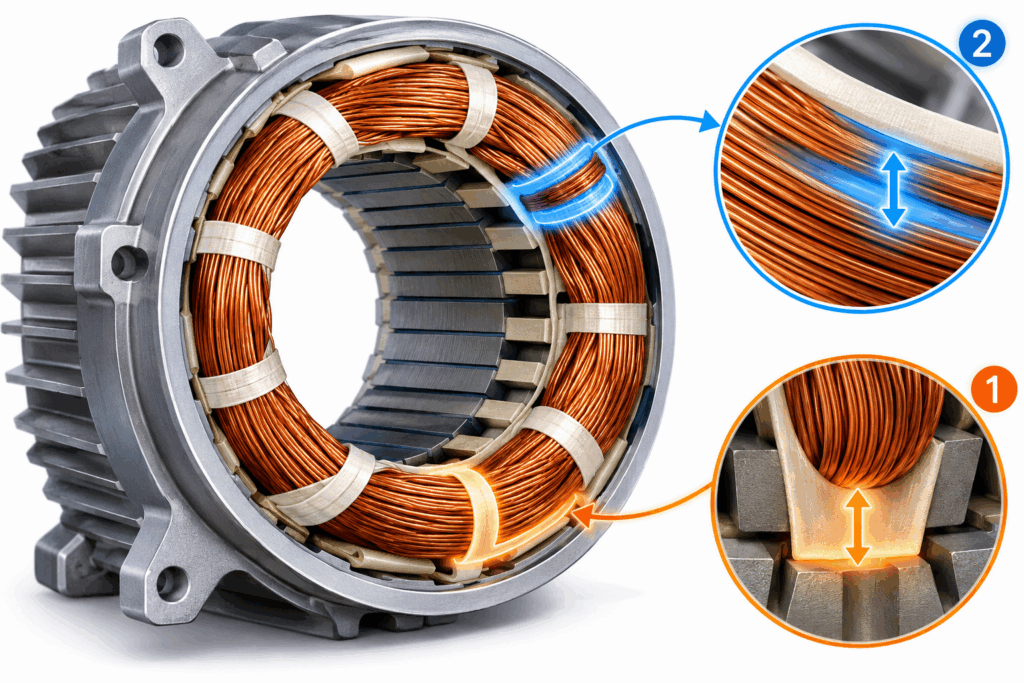
Most hi-pot test failures trace back to one of seven causes.
Cracked potting, nicked enamel, solder bridges and unseated grommets all create a path for current. In motors, add abraded slot liners, thermal ageing and damage during rewinding. If your failures sit in windings, our guides on motor winding failure signs and insulation failures found by a surge tester show what to look for.
Flux residue, dust, fingerprints and moisture lower surface resistance and can cause tracking. A failure that appears only after humidity or heat exposure usually points to a material or process problem, not a random one-off. A motor stored in a damp bay is a classic example.
Inadequate creepage or clearance concentrates the electric field. The giveaway is a sudden arc at a repeatable voltage, often at the same spot. Look at connector backshells, cable exits, transformer leads and fasteners first.
Applying AC when the procedure calls for DC, picking the wrong voltage range, or using an overlong dwell are common slips. Each one can produce a FAIL on a healthy product. Our comparison of AC and DC hipot testing helps you confirm the right method before you test.
A fast ramp causes a charging-current peak that can trip a low limit. Products with filters, long cables, motors or large conductive areas carry more capacitive current, especially under AC. A controlled ramp and a short measurement delay let you separate harmless charging from true leakage.
Cracked lead insulation, contaminated fixtures and leads routed near grounded hardware add leakage or cause arcing. Loose return paths and unclear chassis bonds make readings unstable. Regular care of the instrument matters too, so see how to maintain and calibrate your tester.
High humidity, condensation and temperature extremes change surface leakage. Record ambient conditions with every result so a pattern can emerge.
The way current behaves before the trip is your best clue.
| Failure signature | Likely cause | Next move |
|---|---|---|
| Trips as AC test starts | Capacitive current, fast ramp or low limit | Slow the ramp, review the limit |
| Current decays during DC | Normal charging not covered by the recipe | Add a measurement delay |
| Current rises during dwell | Degradation, moisture or tracking | Treat as a real defect; inspect and dry |
| Sudden arc at a repeatable voltage | Sharp edge, poor spacing, damaged insulation | Inspect the high-field area |
| Intermittent failures | Fixture position, cable movement, humidity, lot or shift | Correlate with each variable |
Safety first: hi-pot voltages are hazardous. Discharge capacitive parts after DC testing, follow lockout procedures, and never bypass an interlock. Our guide on how to work safely with high-voltage test equipment covers the essentials.
Seeing error messages rather than a plain FAIL? Check troubleshooting electrical testing errors and common surge tester errors.
Key Takeaway
Treat every FAIL as data. Capture the numbers, check the setup, test a reference unit, then decide. That order saves rework, protects good product and keeps real defects out of the field.
A hi-pot test confirms the insulation between the winding and ground, or between separate conductors, can take high voltage. It does not stress the thin insulation between neighbouring turns of the same coil. A winding with shorted turns can therefore clear a hi-pot test and still fail weeks later.
That is why repair shops and manufacturers pair the two methods: hi-pot for ground insulation, surge for turn-to-turn insulation. Compare them in surge tester vs hipot tester and surge test vs hi-pot test. If you are building a routine, our article on how to test motor windings and the page on motor insulation testing frequency show how often to test. For deeper diagnosis of insulation ageing, read the partial discharge testing guide.
Prevention beats troubleshooting. Build these habits into your test routine:
The right instrument gives you stable settings, clean data and a safer workflow. Vivid Metrawatt builds testers for three common needs:
| Option | Unit rating | Best for |
|---|---|---|
| 5kV/6kV Digital Surge Tester with DC Hi-Pot | 5kV / 6kV | Repair shops that need surge and DC hi-pot in one unit |
| 10kV/12kV/15kV Digital Surge Tester with Hi-Pot Test | 10kV / 12kV / 15kV | Larger or higher-voltage machines |
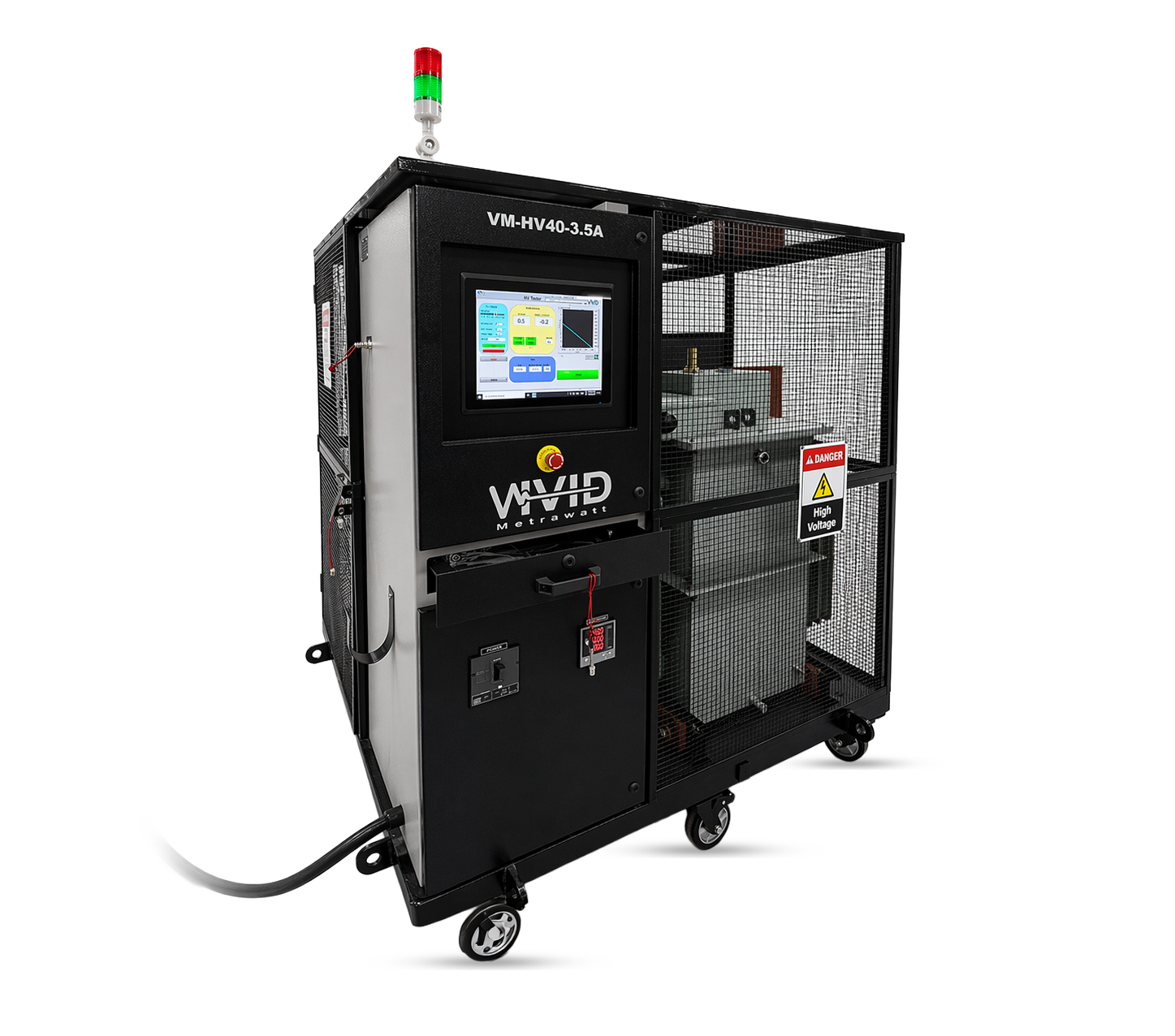
| Automatic High Voltage Tester | 15kV to 40kV | Production lines needing computerised control, logging and interlocked safety |
The automatic range includes 15kV, 20kV, 30kV and 40kV models with real-time monitoring of voltage, current and test status. Not sure which fits? Read the guide to choosing the right high voltage tester or the automatic high voltage tester buyer’s guide. For winding work, see the Digital Surge Tester range.
Related Vivid Metrawatt products for winding and insulation testing:
The two tests stress insulation differently. A megger test reads resistance at a comparatively low DC voltage, while a hi-pot test applies a much higher voltage and exposes weak spots such as sharp edges, tight spacing or cracked potting. Read more in our guide to the megger test and in surge tester vs megger test.
Only if the new limit is justified by the product standard and the expected capacitive current of the product. Raising a limit just to clear a FAIL hides a possible defect and puts a faulty unit in the field.
AC picks up both resistive and capacitive leakage and can reveal flaws DC may miss. DC mainly measures resistive leakage and is gentler on healthy insulation, which is why it is popular for field work. The right choice depends on your standard. Compare both in AC hipot vs DC hipot testing.
Follow your approved investigation plan and keep retests to a minimum. Repeated high-voltage stress can worsen a marginal defect, so every retest should answer a specific question.
Yes. A hi-pot test checks insulation between conductors and ground. Turn-to-turn faults need a surge test. Our surge test vs hi-pot test article explains when to use each.
The 5kV/6kV digital surge tester with DC hi-pot and the 10kV/12kV/15kV digital surge tester with hi-pot test combine both tests in one unit. For production lines, see the Automatic High Voltage Tester range.
Hi-pot test failures are not a verdict, they are a clue. Start by deciding whether the fault sits in the product or in the setup, read the current signature, and work through a documented routine. For motors and windings, remember that hi-pot and surge testing protect different parts of the insulation system.
With the right habits and a tester built for the job, you scrap less, ship with confidence and catch real defects before customers do. Need a second pair of eyes on a stubborn failure? Our engineers are a call away.
Stop Guessing at Hi-Pot Failures
Share your test setup and failure pattern with our engineers. We will help you pinpoint the cause and recommend the right tester for your windings, cables or production line.
Talk to Our Testing Engineers → Explore Hi-Pot TesterPrefer to talk? Call our service hotline: +91 97660 96774