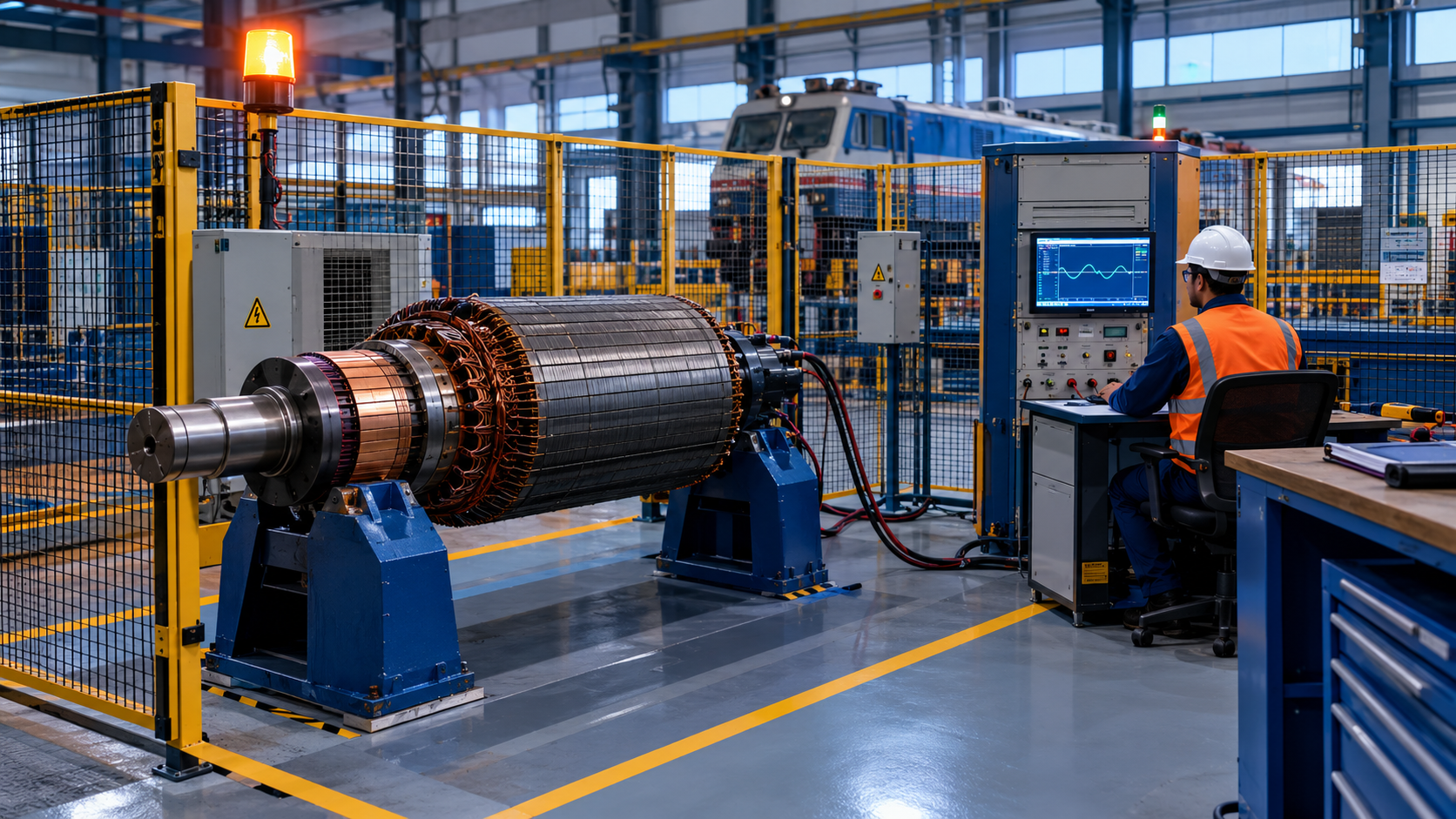

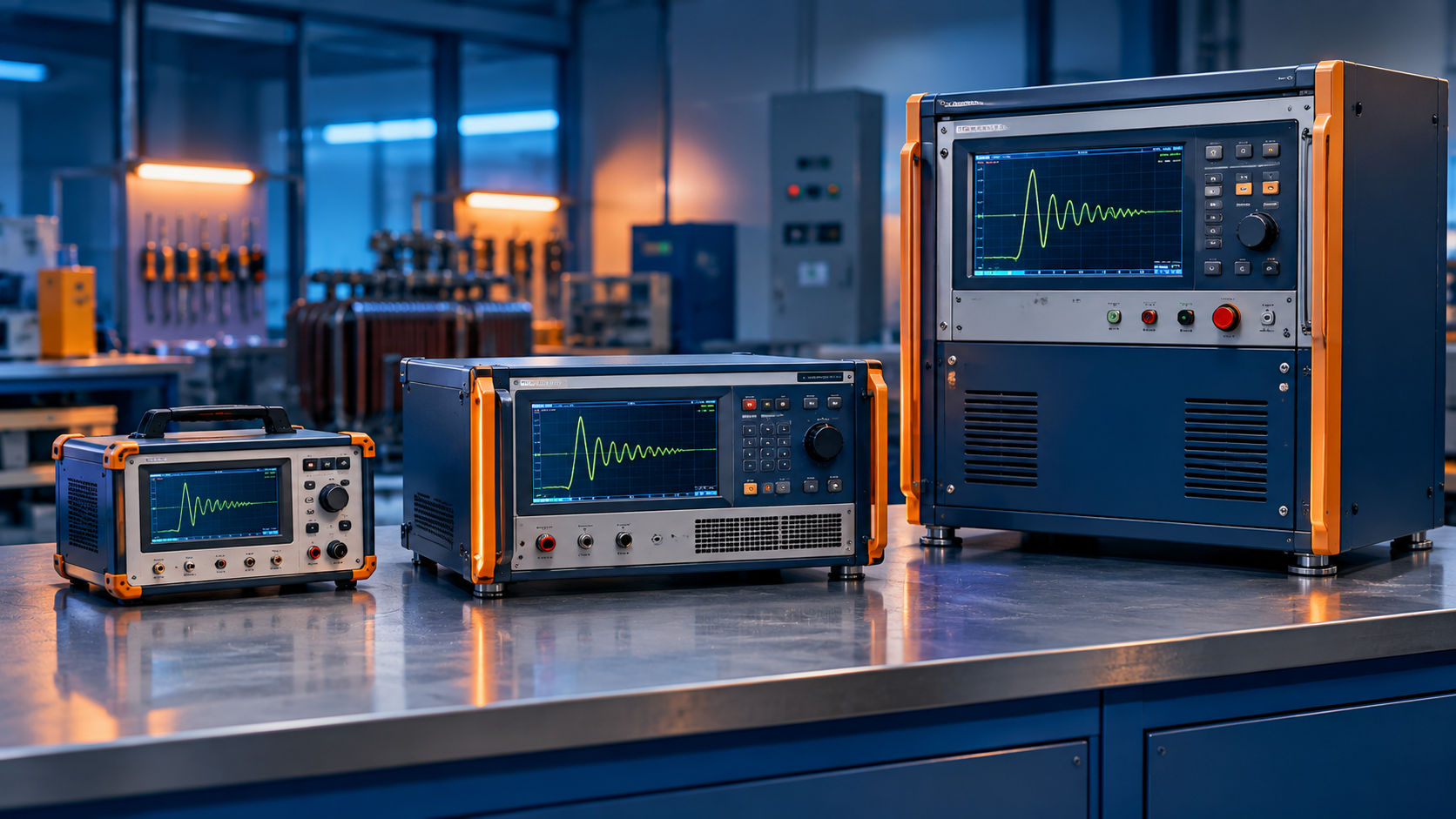
You’ve asked three suppliers for a quote and got three numbers that are lakhs apart. One looks like a bargain, one looks overpriced, and none of them explains why. Buy on price alone and you risk a tester that can’t reach your winding’s test voltage — or one loaded with features you’ll never use. This guide breaks down the real surge tester price in India by budget, so you know exactly what each rupee buys before you sign a PO.
A surge tester isn’t a single product category. A 1 kV armature tester for a small rewinding shop and a 40 kV tester for a power-plant generator share a name, but not much else. Five factors decide where a unit lands on the price scale:
Key point: Two testers at the same kV can differ by lakhs because of energy output, automation, and bundled test functions.
The table below groups the Indian market into four practical budget tiers. Ranges are indicative, ex-GST, based on published market listings and typical configurations in 2026. Your final quote depends on voltage, accessories, and customisation.
| Budget Tier | Indicative Price (ex-GST) | Typical kV Range | What You Get | Best For |
|---|---|---|---|---|
| Entry | Up to ₹1.5 lakh | 1 – 6 kV | Basic comparison, LCD/analog display, manual control | Small rewinding shops, armatures, small coils |
| Mid | ₹1.5 – 3.5 lakh | 3 – 6 kV | Digital waveform storage, auto pass/fail, basic reports | Motor repair workshops, OEM production QA |
| Professional | ₹3.5 – 7 lakh | 10 – 15 kV | High power, Hi-Pot or bar-to-bar, PC-based software | HT motors, traction armatures, industrial plants |
| Heavy-Duty | ₹7 lakh + | 25 – 50 kV | DC Hi-Pot, advanced analytics, custom builds | Power generation, large alternators, railways |
This tier covers compact testers built for low-voltage windings. They do one job well: comparing waveforms to spot turn-to-turn shorts in small coils.
Trade-off: Limited data storage and reporting. If customers or auditors ask for printed test records, you’ll outgrow this tier quickly. New to armature testing? Start with what a digital armature surge tester is.
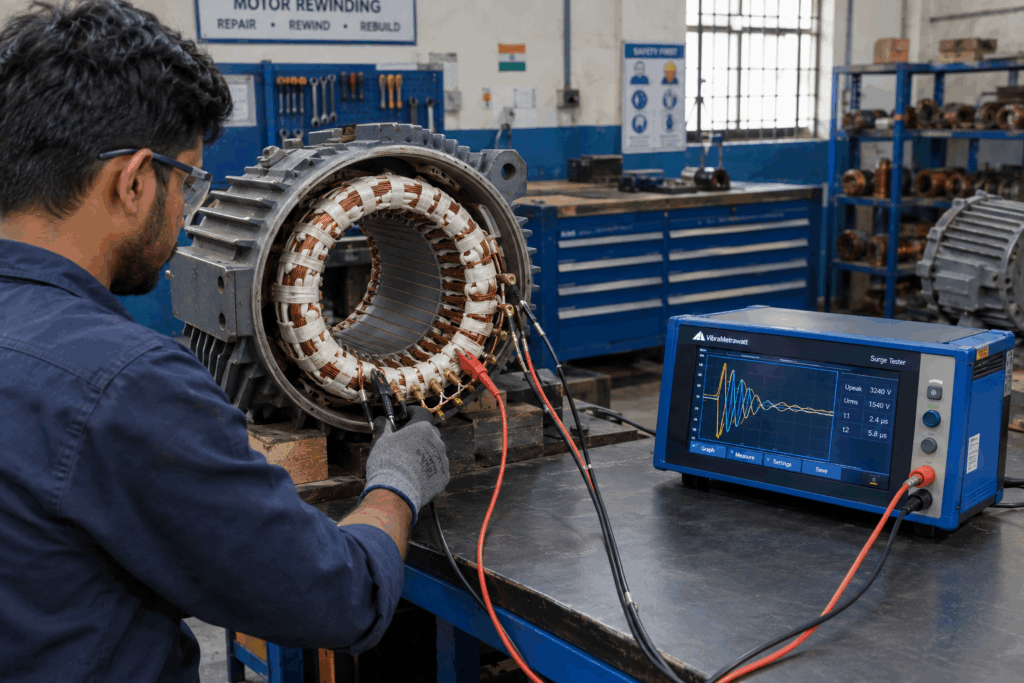
This is where most motor repair workshops and production lines land. You move from “seeing” a waveform to measuring it, with stored masters and objective pass/fail limits.
Trade-off: Voltage headroom stops around 6 kV, so HT motors are out of scope. Unsure between manual and automatic at this budget? Read manual vs automatic surge tester.
This tier is built for industrial plants, HT motor service centres, and traction workshops. Units here usually combine two or three tests in one instrument, which saves bench space, operator time, and a second purchase.
Why it’s often the smartest spend: One combined unit replaces a separate surge tester and Hi-Pot set. To understand what that extra function actually checks, see what Hi-Pot means in a digital surge tester. Railway buyers should also read our workshop setup guide for surge testing railway traction motors.
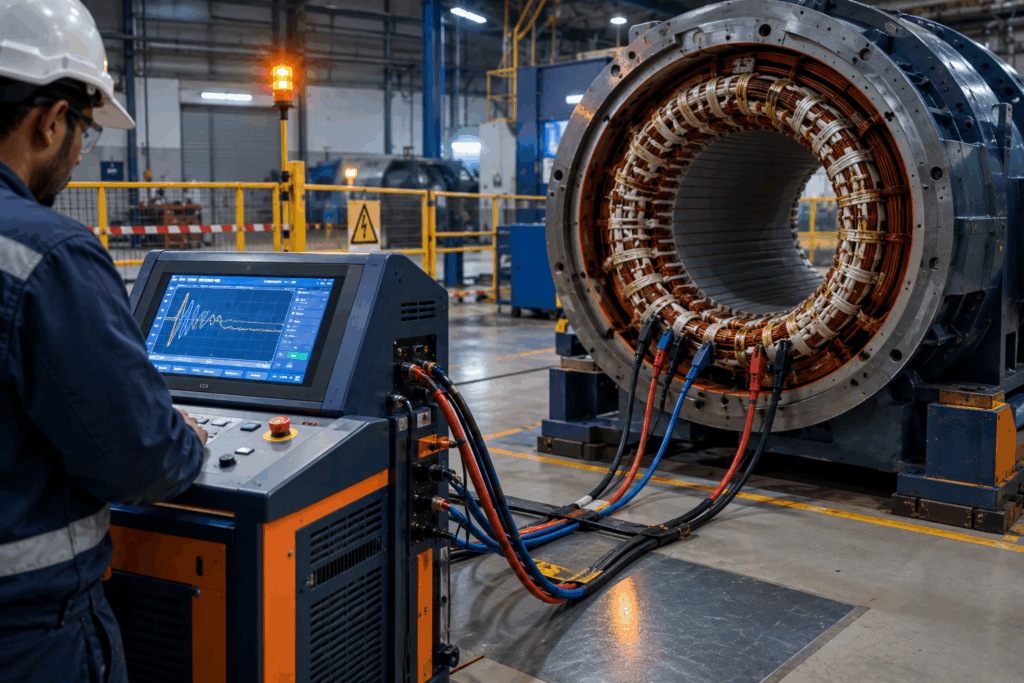
At this level, you’re buying for large rotating machines where a single failure can cost crores. These testers are often configured or customised to the buyer’s specification.
For real-world context on this class of equipment, read how 50 kV surge testers help reduce motor failures.
The quoted price is rarely the full cost. Budget for these line items before you compare quotes:
Buyer tip: Ask every supplier for a line-by-line quote. A low headline price with paid installation, no training, and costly spares often ends up more expensive.
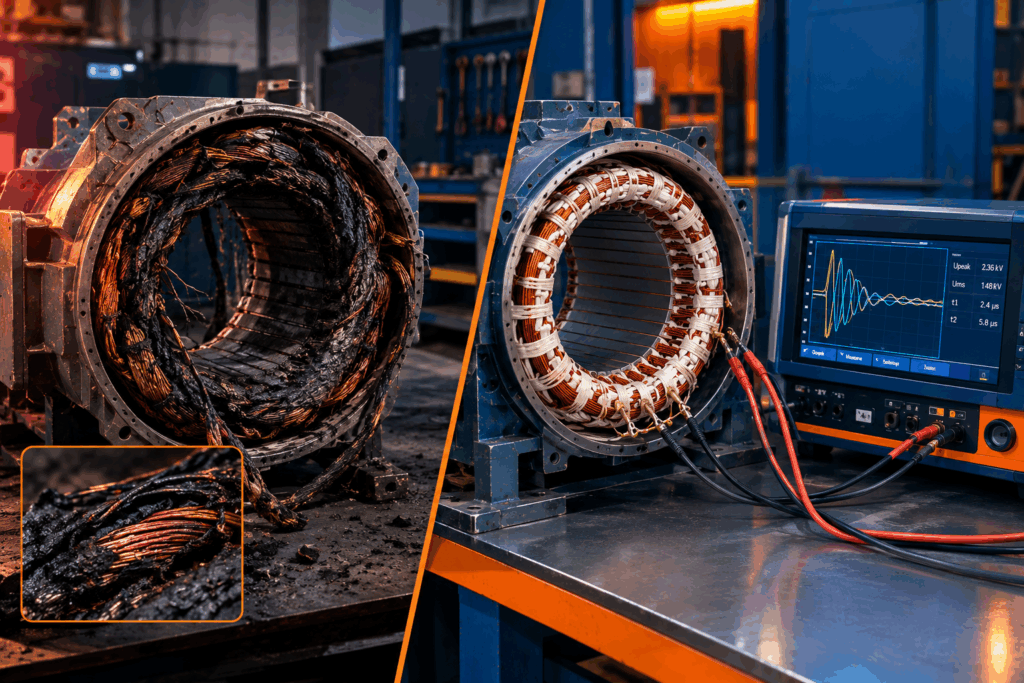
A megger or insulation resistance test can’t detect a weak turn-to-turn insulation fault. A surge test can. That difference is why the investment usually pays back fast. Our surge tester vs megger test breakdown explains the gap in detail.
Consider a motor rewinding shop that returns even a few rewound motors a year because of early turn-to-turn failures. Each comeback means:
If a mid-budget tester prevents even a handful of these comebacks, it can recover its cost within the first year or two. Beyond direct savings, printed test reports help win contracts with plants and PSUs that demand documented QA. The broader benefits of using surge testers go well beyond fault detection.
Use this four-step path before you request quotes:
For a deeper checklist, read choosing the right surge tester: key considerations. Comparing Indian brands? Our Jabbals vs Vivid Metrawatt digital surge tester comparison lays out features side by side.
Explore the complete digital surge tester range, or see why we’re a leading digital surge tester manufacturer and supplier in India.
Basic surge testers start around ₹50,000 on Indian listings. Digital industrial models with waveform storage generally start from about ₹1.5 lakh and rise with kV rating and features.
Higher voltage demands larger energy-storage components, stronger insulation, and more robust safety systems. High-power and combined Hi-Pot versions add further cost.
Usually not. Most quotes are ex-GST, and test equipment is typically billed at 18%. Confirm on the proforma invoice.
Yes, if it has the right kV range and a bar-to-bar option. A 6 kV or 10–15 kV unit with bar-to-bar testing covers both in most workshops.
Share your winding types, voltage ratings, and required tests with the manufacturer. A tailored quote is always more accurate than a marketplace listing.
The right surge tester price in India isn’t the lowest number on a listing — it’s the price of a tester that matches your windings, your test functions, and your reporting needs. Entry units suit small armatures. Mid-budget digital testers serve most LT motor workshops. Professional and heavy-duty models protect HT motors, traction equipment, and generators where failures are costly. Define your voltage and test requirements first, then compare total cost of ownership. That’s how you buy once and buy right.
Tell us your winding types and voltage ratings. Our engineers will recommend the right model and send a clear, line-by-line quote — no guesswork, no hidden costs.
Request a Price Quote Call +91 97660 96774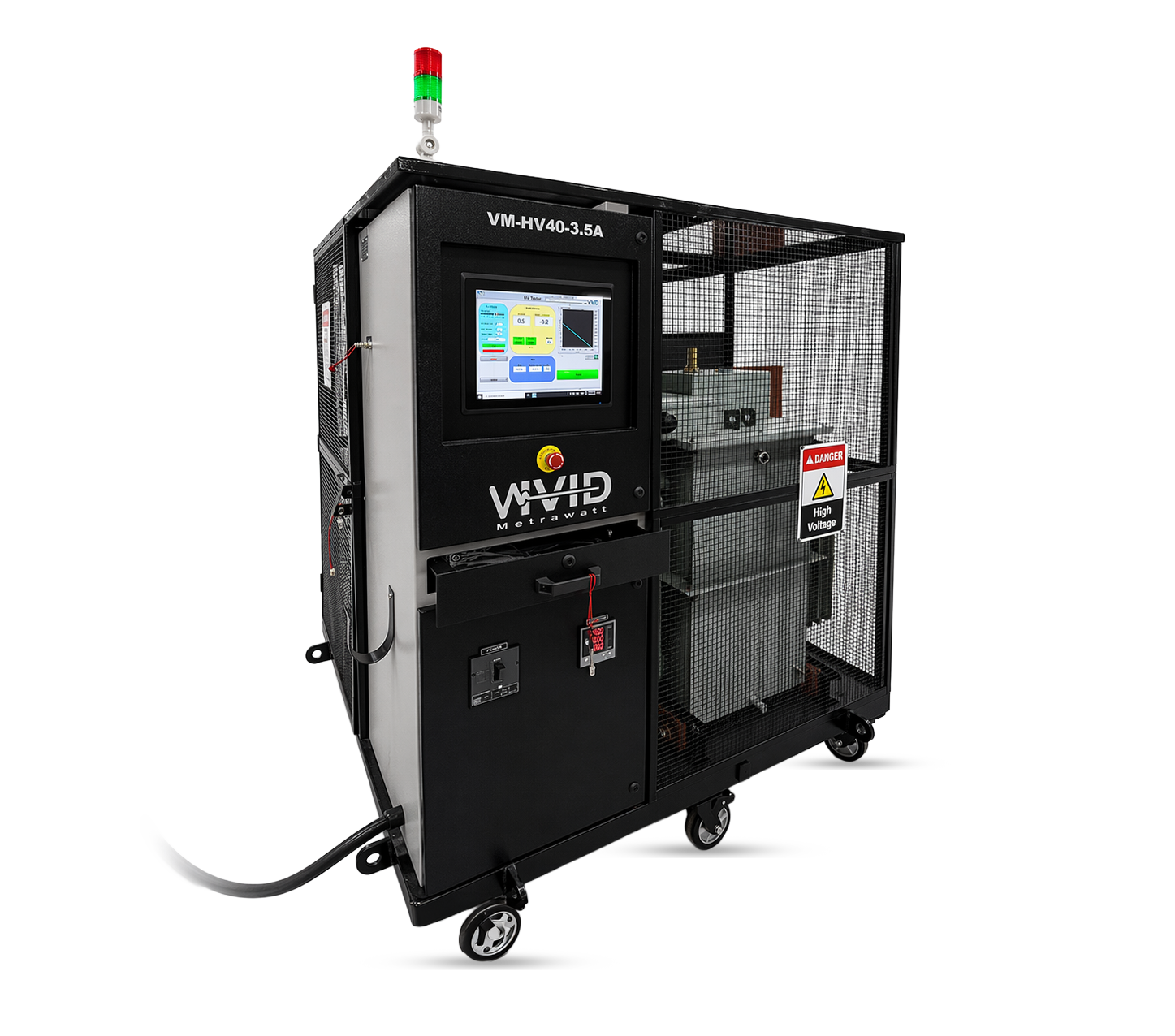

![Surge Testing for Wind Turbine Generators: Complete Guide [2026]](https://vividmetrawattglobal.com/wp-content/uploads/2026/09/a_wide_cinematic_industrial_outdoor_scene_at_an_o.webp)
![Which Surge Tester KV Rating Do You Need? 1KV vs 3KV vs 6KV vs 15KV [2026 Buyer’s Guide]](https://vividmetrawattglobal.com/wp-content/uploads/2026/09/wide_well_lit_industrial_workshop_scene_a_clean.webp)