![Surge Testing for Wind Turbine Generators: Complete Guide [2026]](https://vividmetrawattglobal.com/wp-content/uploads/2026/09/a_wide_cinematic_industrial_outdoor_scene_at_an_o.webp)

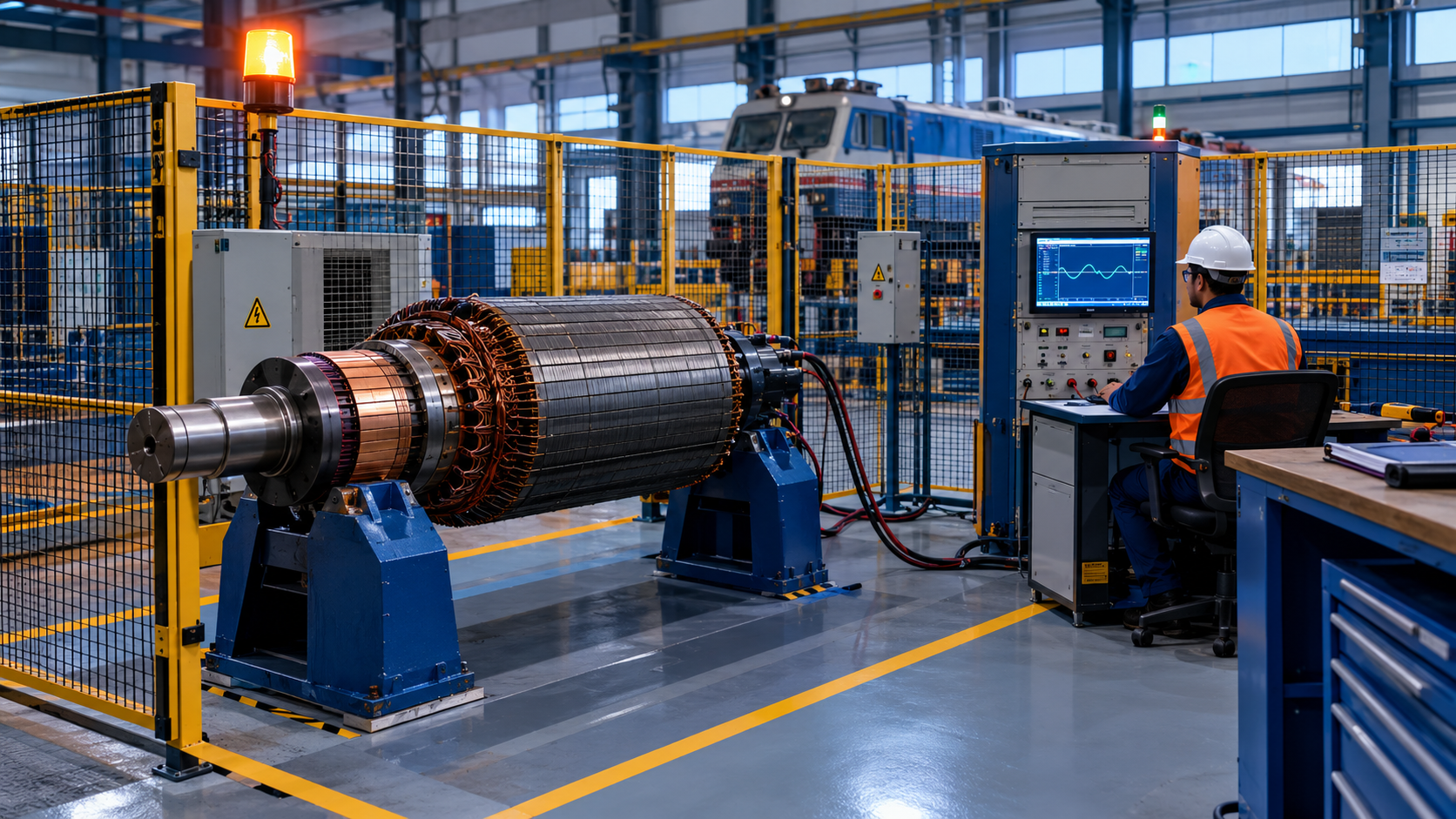
A traction motor that fails on the line doesn’t just need a rewind. It can stall a locomotive, delay a train, and pull a rake out of service for days. Most of these failures start as a weak turn that no insulation resistance test flagged. Skipping proper surge testing for railway traction motors means sending motors back into service with hidden faults. This guide shows you how to set up a workshop test bay that catches them first.
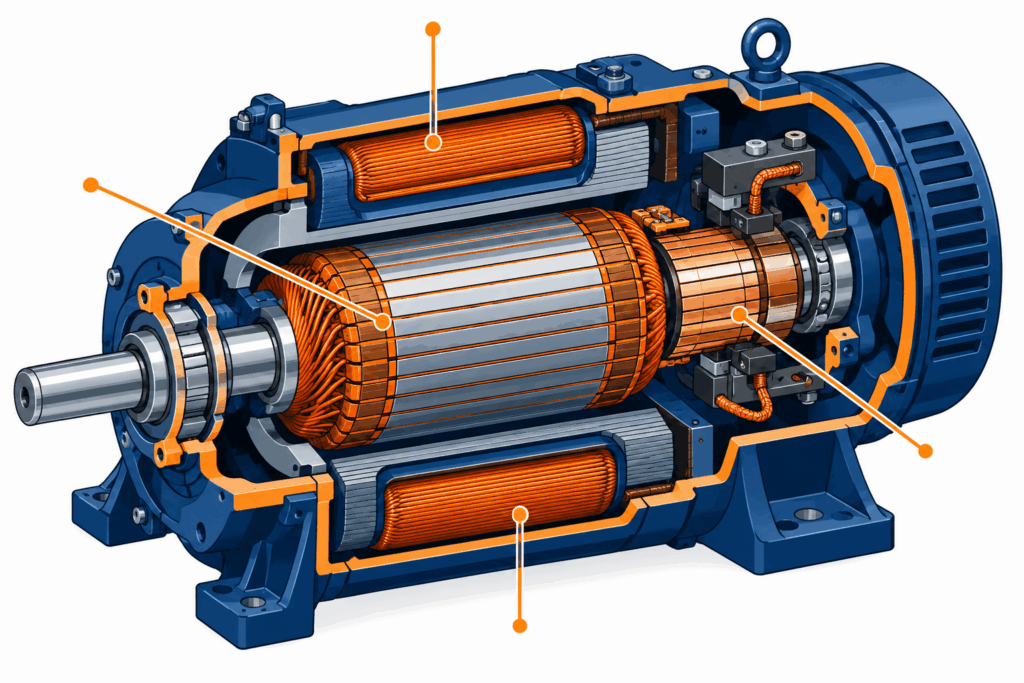
Traction motors live in one of the harshest environments any electric machine sees. They’re mounted on bogies, exposed to dust and moisture, and switched on and off thousands of times a day.
Four stresses break down winding insulation faster than in stationary industrial motors:
The first insulation layer to fail is usually turn-to-turn. A megger checks insulation to ground, not between turns, so a motor can pass IR and still carry a fault. Our guide on how surge testers detect insulation failures explains the physics. For the direct comparison, read the difference between megger and surge test for windings.
Indian Railways operates two broad traction motor families, and each needs a slightly different setup.
| Component | Motor Type | What Surge Testing Finds | Test Focus |
|---|---|---|---|
| Armature | DC series traction motors (conventional locos, older EMUs) | Shorted turns, commutator bar shorts, open connections | Surge + bar-to-bar |
| Field & interpole coils | DC series traction motors | Turn shorts, weak coil insulation | Coil-to-coil comparison |
| Stator winding | 3-phase asynchronous traction motors (e.g., WAP-7 / WAG-9 fleets) | Turn-to-turn and phase-to-phase weaknesses | High-kV stator surge |
| Individual coils | Both types, before assembly | Manufacturing defects in new or rewound coils | Coil-level surge |
For the armature procedure in detail, see how to test an armature using a surge tester.
Your equipment choice should follow the largest winding you service and the tests your maintenance schedule requires. Always treat the **OEM and RDSO maintenance instructions** for each motor type as the governing reference for test voltages.
Why combined units win in railway sheds: One instrument covers surge and Hi-Pot, which reduces lead changes, saves bay space, and keeps records in one system. Learn the difference between the two in surge test vs Hi-Pot test. Planning the budget? Our surge tester price in India guide maps each kV class to a realistic price tier.
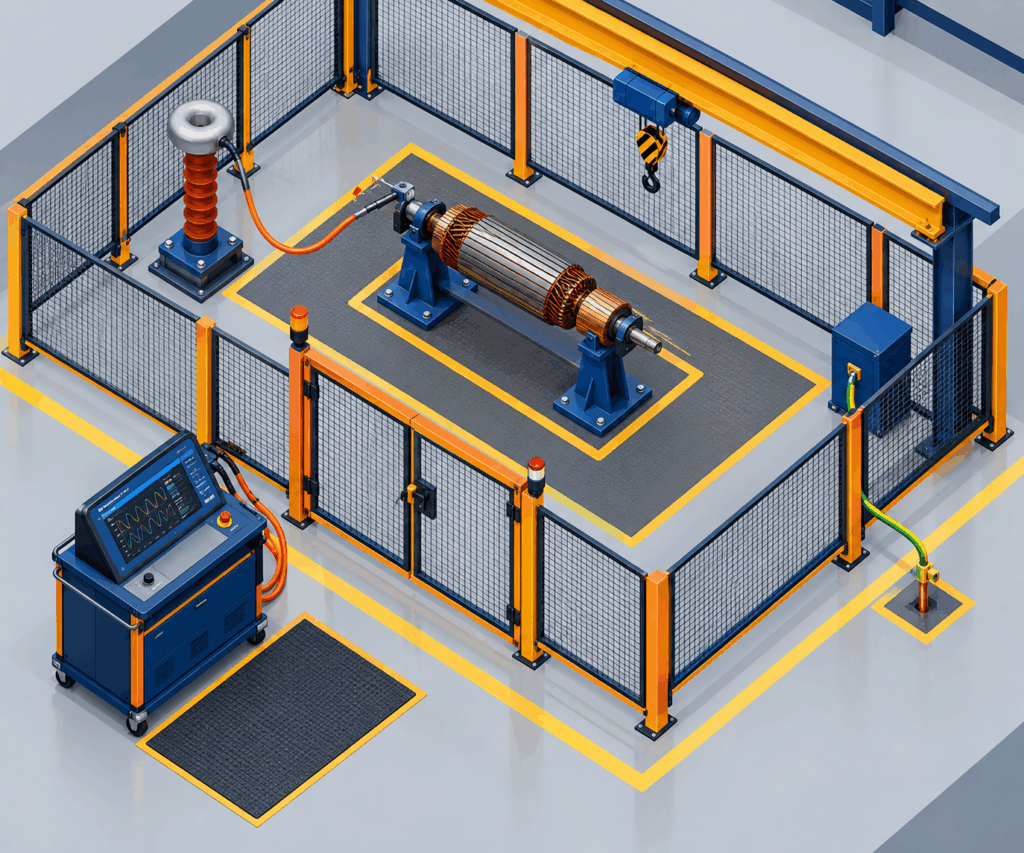
A well-designed test bay makes results repeatable and keeps technicians safe. Here’s how to set one up.
Follow the full checklist in how to work safely with high voltage test equipment.
Fit a footswitch so the operator can keep both hands clear of the test object while triggering the surge. See how to use a footswitch for hands-free surge testing.
Create a test model for each motor type — voltage, pass/fail limits, and reference waveforms. Label every model clearly, so the test is consistent across shifts and operators.
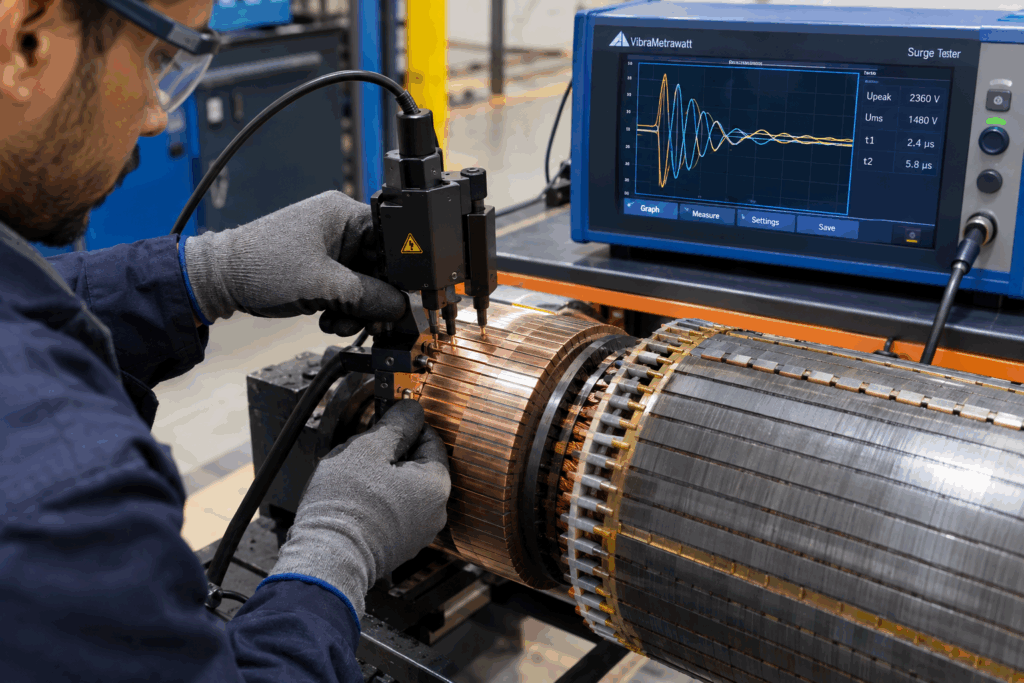
Running tests in the right order protects the winding and gives you meaningful data. A widely used sequence is:
Rule of thumb: Never apply surge or Hi-Pot to a winding that has failed IR. Dry it out or repair first.
For stators rewound during POH, repeat the surge test after VPI (varnish impregnation) and curing to confirm the final build.
A digital surge tester compares the test waveform against a stored master or against the other phases. The key things to read are:
For practical interpretation with example waveforms, read waveform analysis in surge testing.
Consistent records let your shed spot deteriorating motors early and schedule rewinds before failures. For intermittent readings, see troubleshooting common surge tester errors.
For deeper insulation diagnostics on larger machines, consider partial discharge testing as a complementary method.
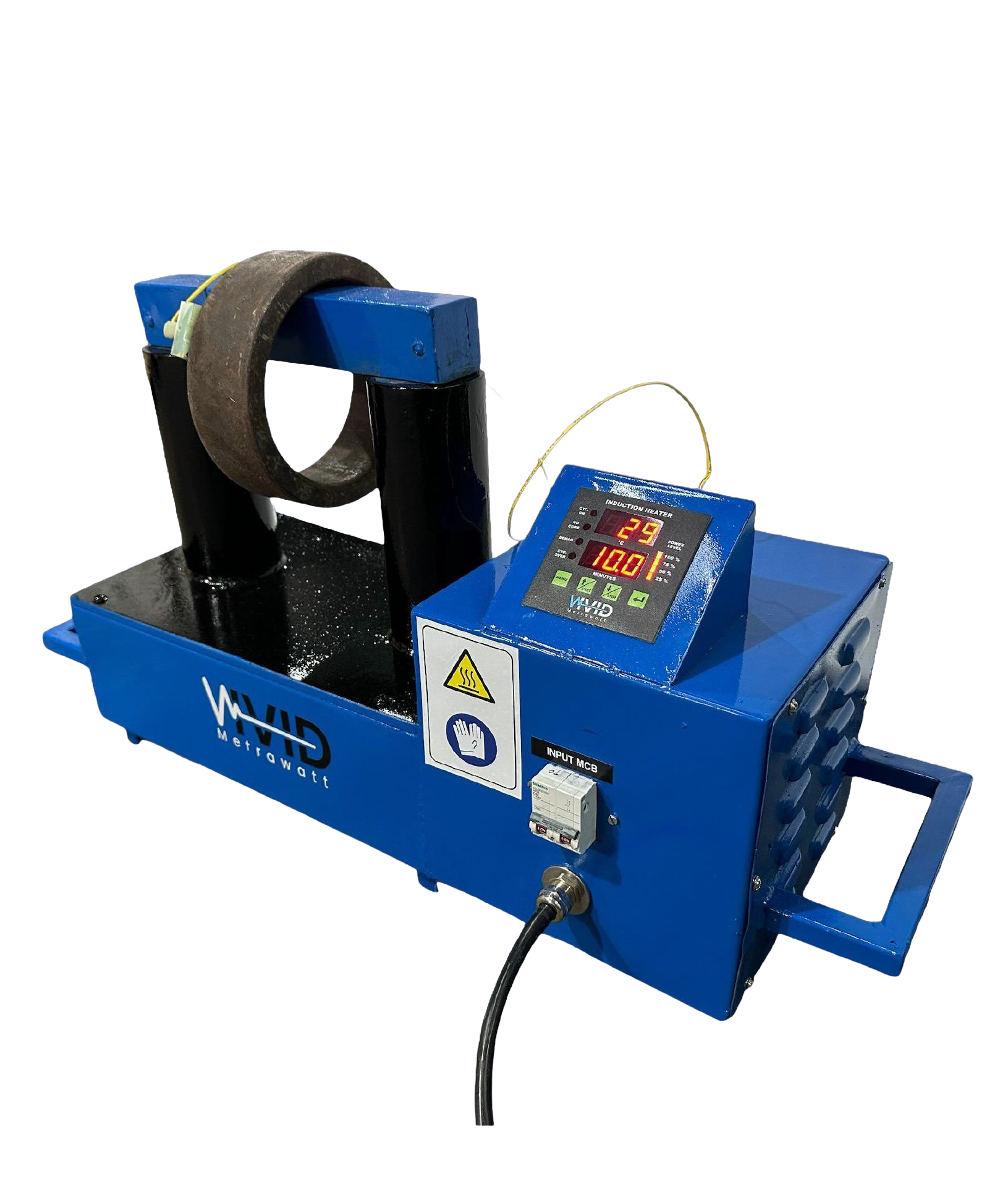
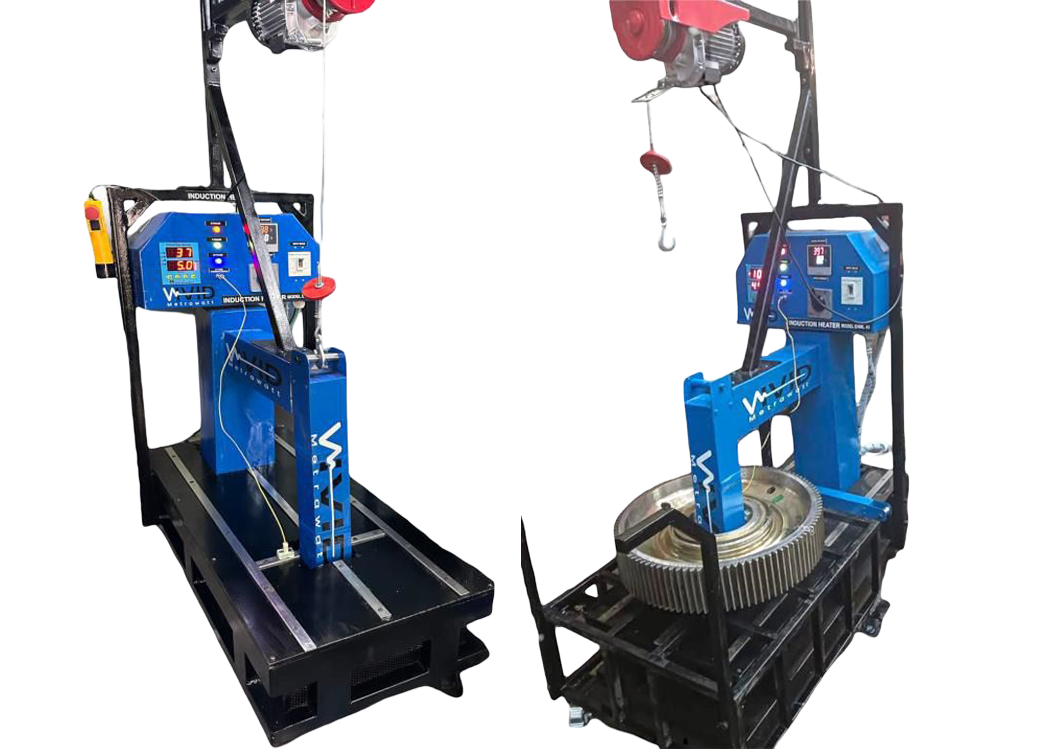
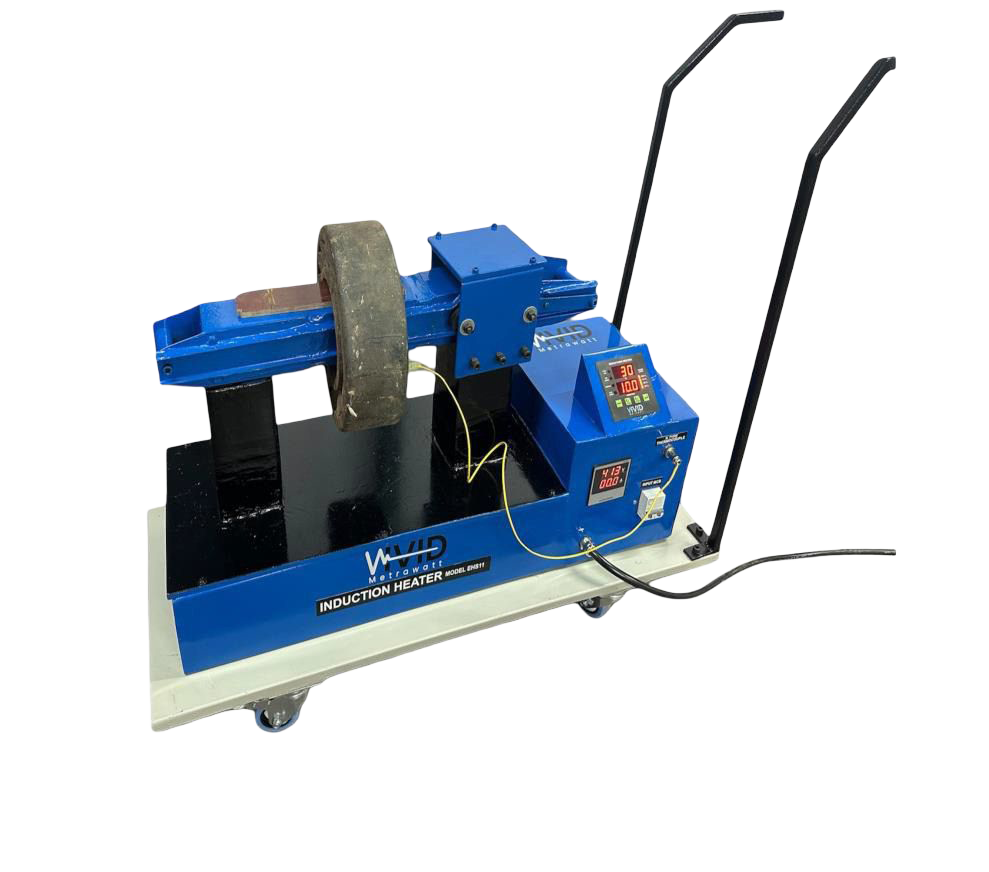
See the organisations we work with on our clients page, explore the full digital surge tester range, or read how we support rolling stock maintenance with induction heating solutions for railways.
It’s a high-voltage impulse test that stresses turn-to-turn insulation in traction motor windings. The tester compares the response waveform against a reference to detect shorted or weak turns.
Test during every scheduled overhaul, after any rewind or repair, and before a motor returns to service. Follow the OEM and RDSO maintenance schedule for your fleet.
It depends on the motor. Armature and coil work often suits 6 kV bar-to-bar units, while 3-phase traction stators typically need 10–15 kV class testers with Hi-Pot.
At correct voltages on a dry, IR-verified winding, it’s non-destructive. Damage risk rises only if you over-voltage the winding or test one that’s already failed IR.
Not if you choose a combined unit. Surge + Hi-Pot models handle both tests from one instrument and one report.
Effective **surge testing for railway traction motors** comes down to three things: the right tester, a safe and well-earthed bay, and a disciplined test sequence with good records. Get those right, and your shed catches turn-to-turn faults before they turn into line failures, delayed trains, and costly rewinds. Start by mapping your motor types to the right kV class, then build the bay around safety and repeatability.
Share your motor types and workshop layout. Our engineers will recommend the right surge tester, bay configuration, and training plan — trusted by Indian Railways workshops nationwide.
Talk to a Test Engineer Call +91 97660 96774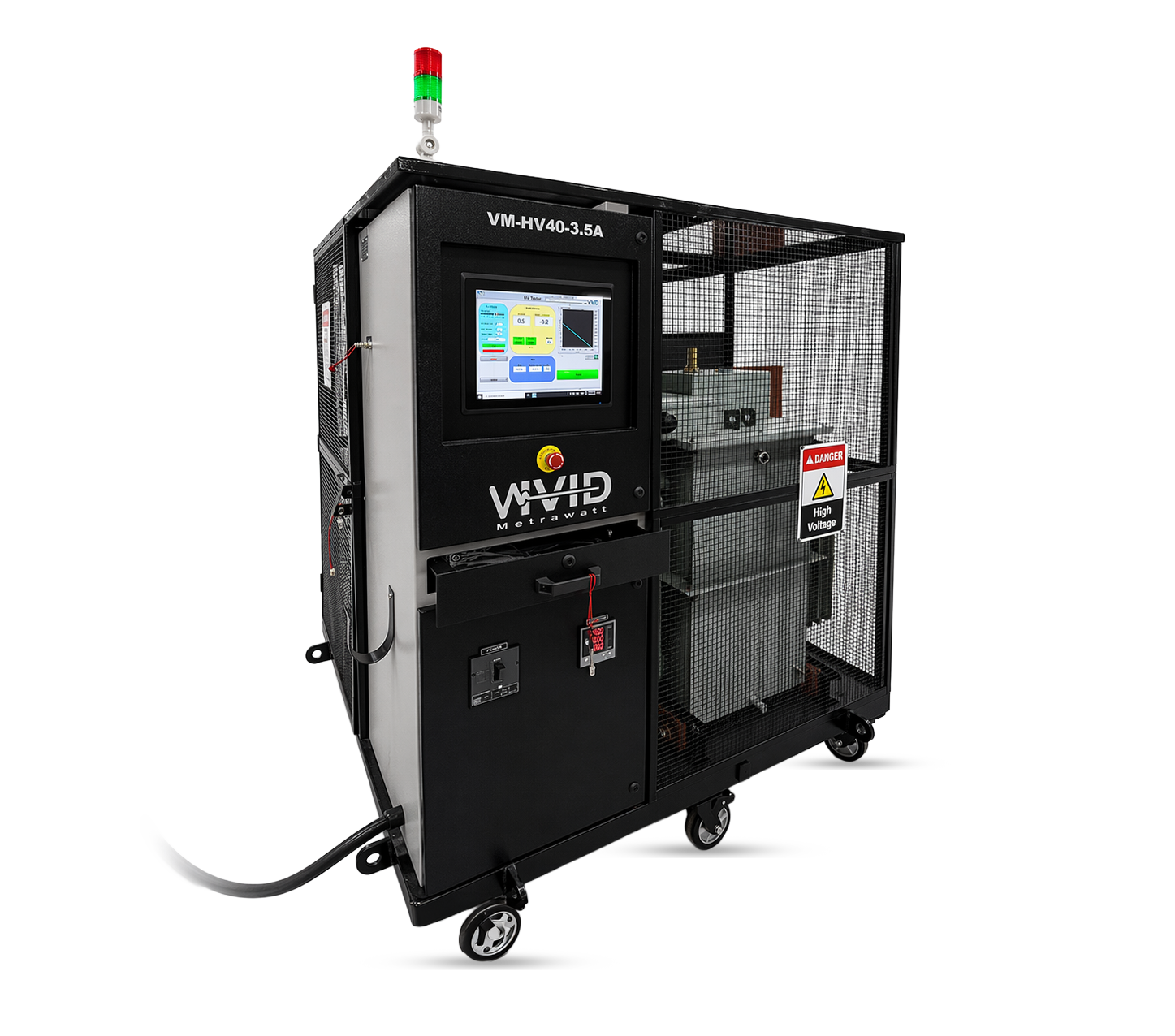

![Which Surge Tester KV Rating Do You Need? 1KV vs 3KV vs 6KV vs 15KV [2026 Buyer’s Guide]](https://vividmetrawattglobal.com/wp-content/uploads/2026/09/wide_well_lit_industrial_workshop_scene_a_clean.webp)