
A single insulation failure on the shop floor can shut down a production line for days and turn a routine motor repair into a six-figure warranty claim. Most of the time, the root cause traces back to one thing: a test instrument that wasn’t right for the job. Choosing the right high voltage tester the first time protects your equipment, your technicians, and your budget — this guide shows you exactly how to do it.
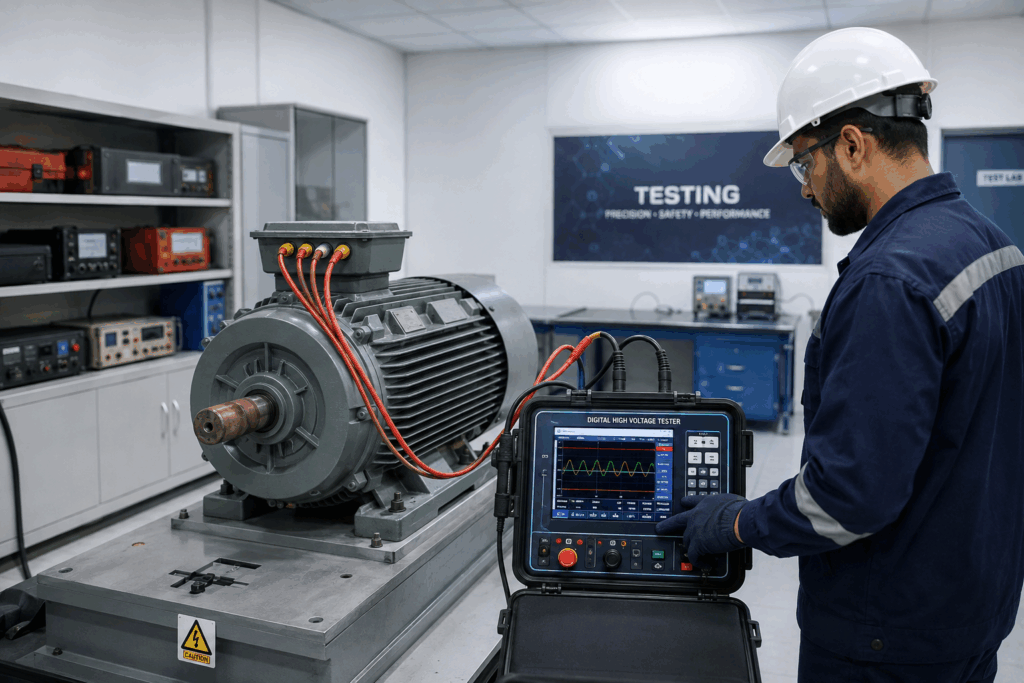
A high voltage tester applies a controlled high-voltage stress to insulation, windings, cables, or components to reveal weaknesses long before they cause a field failure. Used correctly, it’s the difference between planned maintenance and unplanned downtime.
Picking the wrong instrument creates three real business problems:
If you’re new to the fundamentals, our explainer on what a high voltage test actually measures is a useful starting point before you shop.
Before comparing brands or specs, get clear on what you’re actually testing:
Each application has a different voltage ceiling and duty cycle. A repair shop testing fractional-horsepower motors has very different needs from a utility testing 33kV switchgear. Review your equipment’s rated voltage and multiply by the applicable test factor (often 2x rated voltage plus a safety margin, per IEC/IEEE guidance) to land on the kV class you actually need.
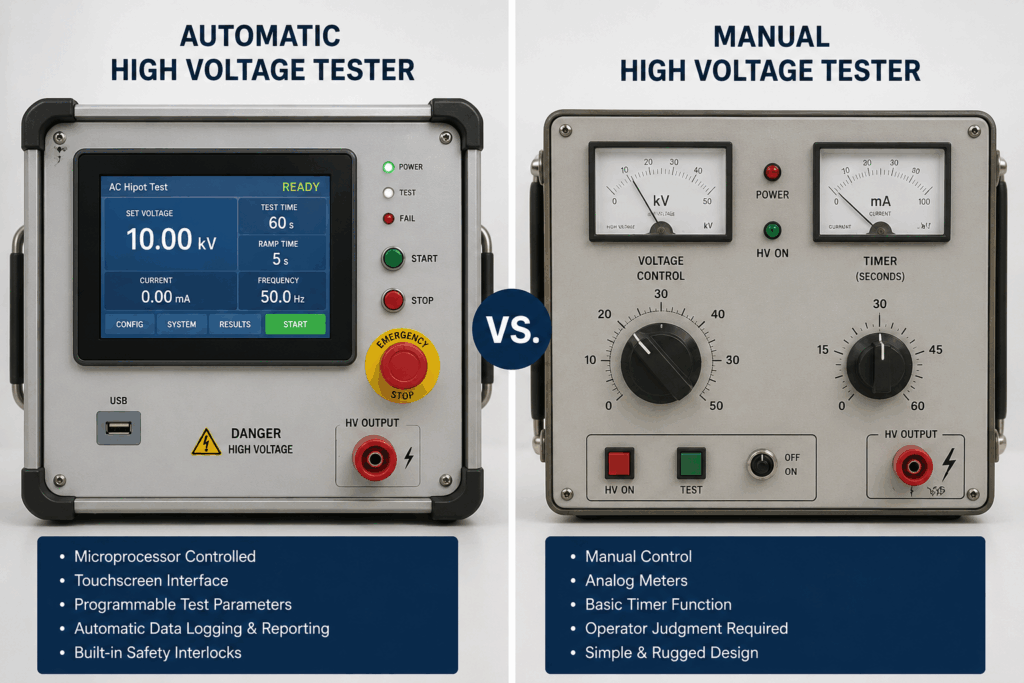
This is usually the first fork in the road for buyers.
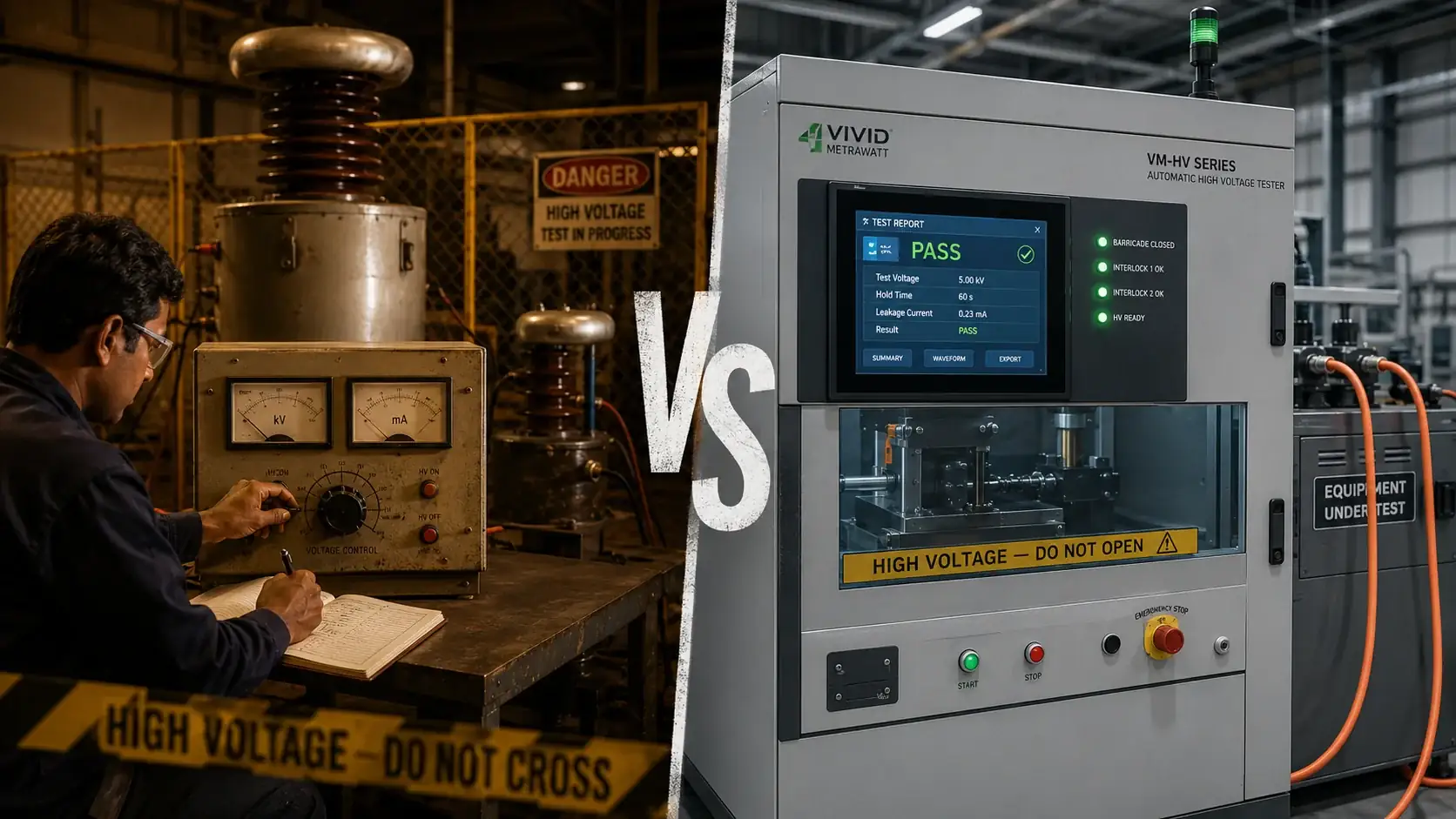
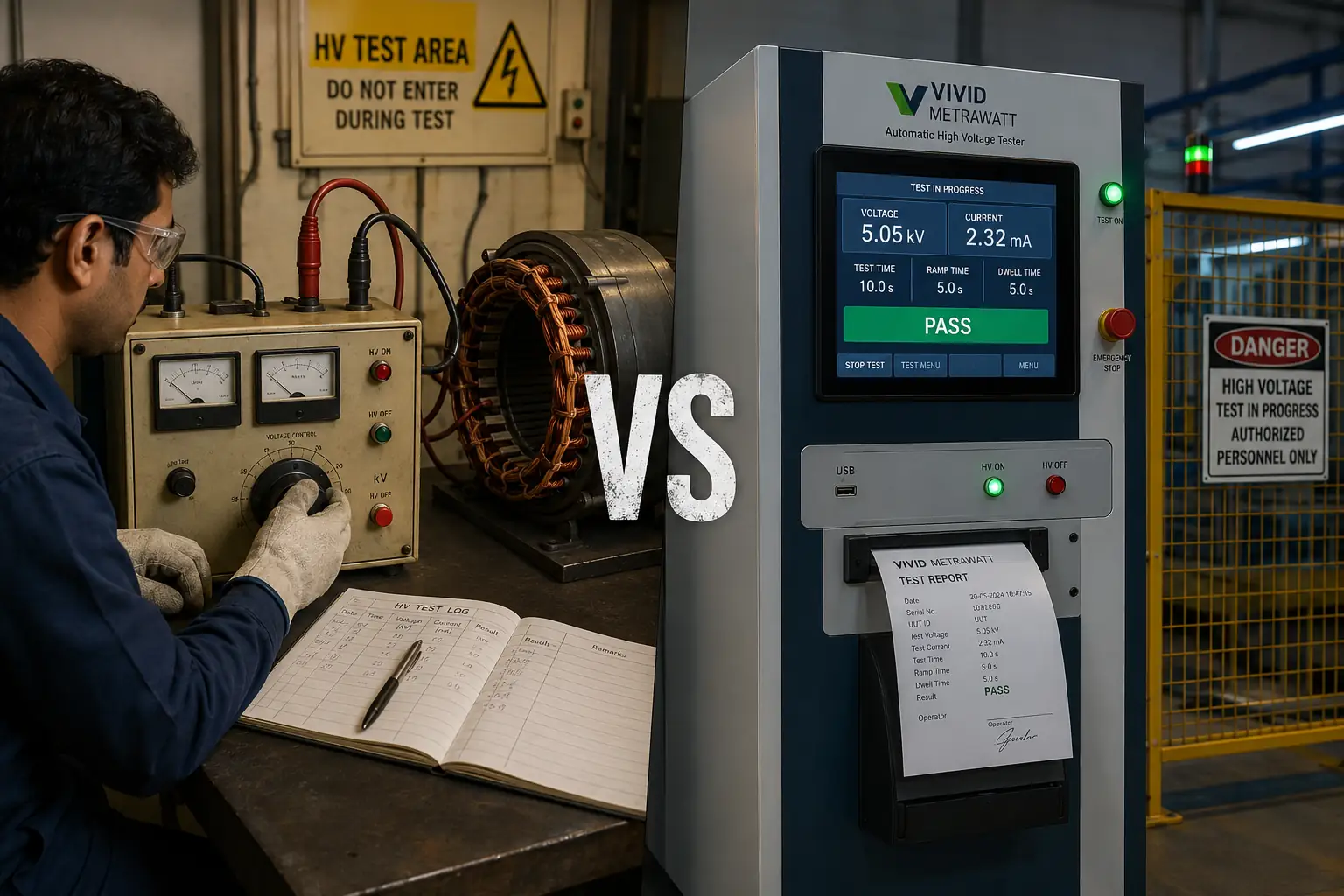
If you’re testing dozens of units a day, the labor savings alone usually justify the upgrade within a year. For a deeper side-by-side, see our comparison of automatic vs manual HV testing and the detailed automatic high voltage tester buyer’s guide.
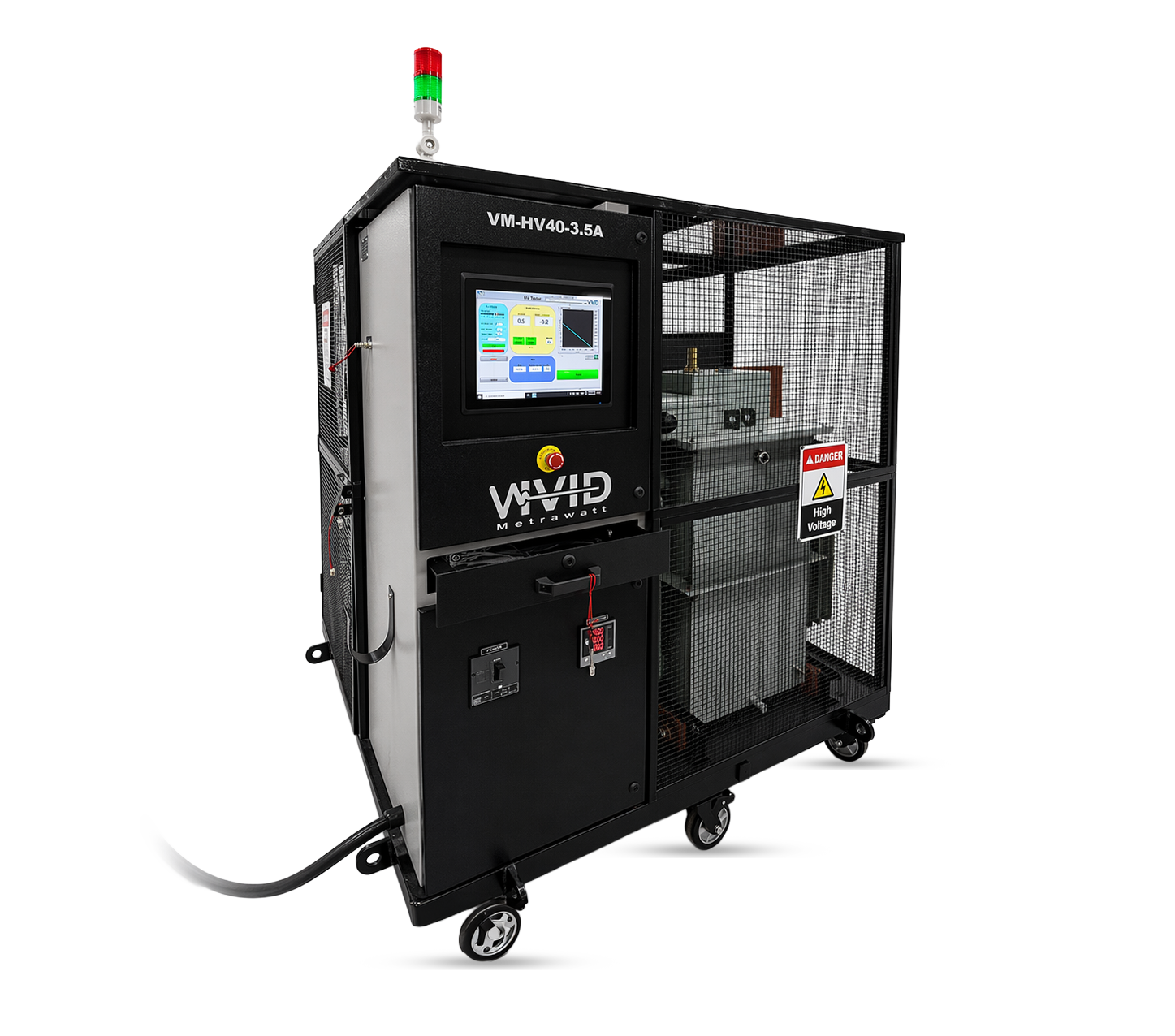
Buying too little kV headroom means you’ll be shopping again in a year as your product line grows. Buying far more than you need adds cost without benefit. Vivid Metrawatt’s automatic range covers this exact decision:
Key takeaway: Size for your largest current asset plus 20–30% headroom for future product lines, not just today’s job list.
Buyers often assume “high voltage testing” is one test. It isn’t. Each method catches different failure modes:
Confirms insulation can withstand overvoltage without breakdown to ground. Read our breakdown of what hipot testing means in a digital surge tester and the AC hipot vs DC hipot testing comparison to pick the right waveform for your dielectric.
Detects weak inter-turn insulation before it fails in the field — critical for motor and generator windings. Learn more in what is a surge tester.
A lower-voltage baseline check, often run alongside hipot and surge tests, not instead of them. See how to perform a megger test and how it stacks up in surge tester vs megger test.
Most quality-focused buyers standardize on a combination unit. Our surge test vs hi-pot test and surge tester vs hipot tester guides explain why a combined surge + hipot instrument covers more failure modes per test cycle than a single-function tester — check our digital surge tester range for combined models.
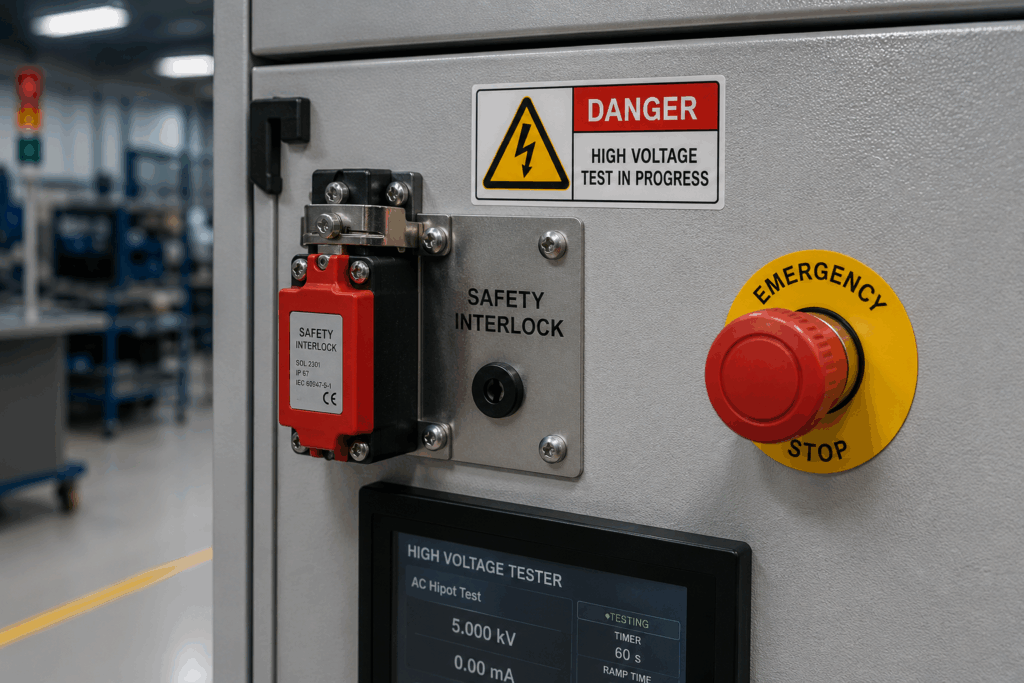
High voltage testing carries real risk to operators. Before you shortlist any unit, confirm it includes:
A tester without these isn’t cheaper — it’s a liability sitting on your floor.
For regulated industries (rail, aerospace, power generation, export-oriented manufacturing), the paperwork matters as much as the pass/fail result. Look for:
A high voltage tester is a precision instrument, not a one-time purchase. Ask every vendor:
Our guides on how to maintain and calibrate your digital surge tester and troubleshooting electrical testing errors give you a realistic sense of the ongoing ownership effort — and a vendor who publishes this kind of content is usually one who stands behind the equipment after the sale.
| Application | Typical Asset kV | Recommended Class | Test Type Priority |
|---|---|---|---|
| Small/fractional motors | Up to 10kV | 15kV Automatic | Surge + Hipot |
| Industrial motors | 10–18kV | 20kV Automatic | Surge + Hipot |
| Generators, large motors | 18–28kV | 30kV Automatic | Surge + Hipot + PD screening |
| Transformers, MV switchgear | 28–38kV | 40kV Automatic | Hipot + PD analysis |
A surge tester specifically detects weak inter-turn winding insulation, while “high voltage tester” is a broader term that includes hipot, surge, and combined instruments testing insulation at elevated voltage.
Check your equipment’s rated operating voltage, apply the relevant IEC/IEEE test-voltage multiplier, then add headroom for future assets — see Step 3 above.
For any facility testing more than a handful of units daily, yes — the reduction in operator error and labor time typically pays back within 12–18 months.
Most manufacturers recommend annual calibration, though high-duty-cycle environments may need it more frequently — confirm this with your supplier at purchase.
Choosing the right high voltage tester isn’t about finding the unit with the most impressive spec sheet — it’s about matching voltage class, test method, safety features, and after-sales support to how your facility actually operates. Get those four decisions right, and you’ll catch insulation failures before they become downtime, protect your technicians, and pass every audit that comes your way.
Talk to Vivid Metrawatt’s engineering team — nearly 30 years of testing expertise, trusted by Indian Railways and industrial plants worldwide.
Get a Free Consultation →