
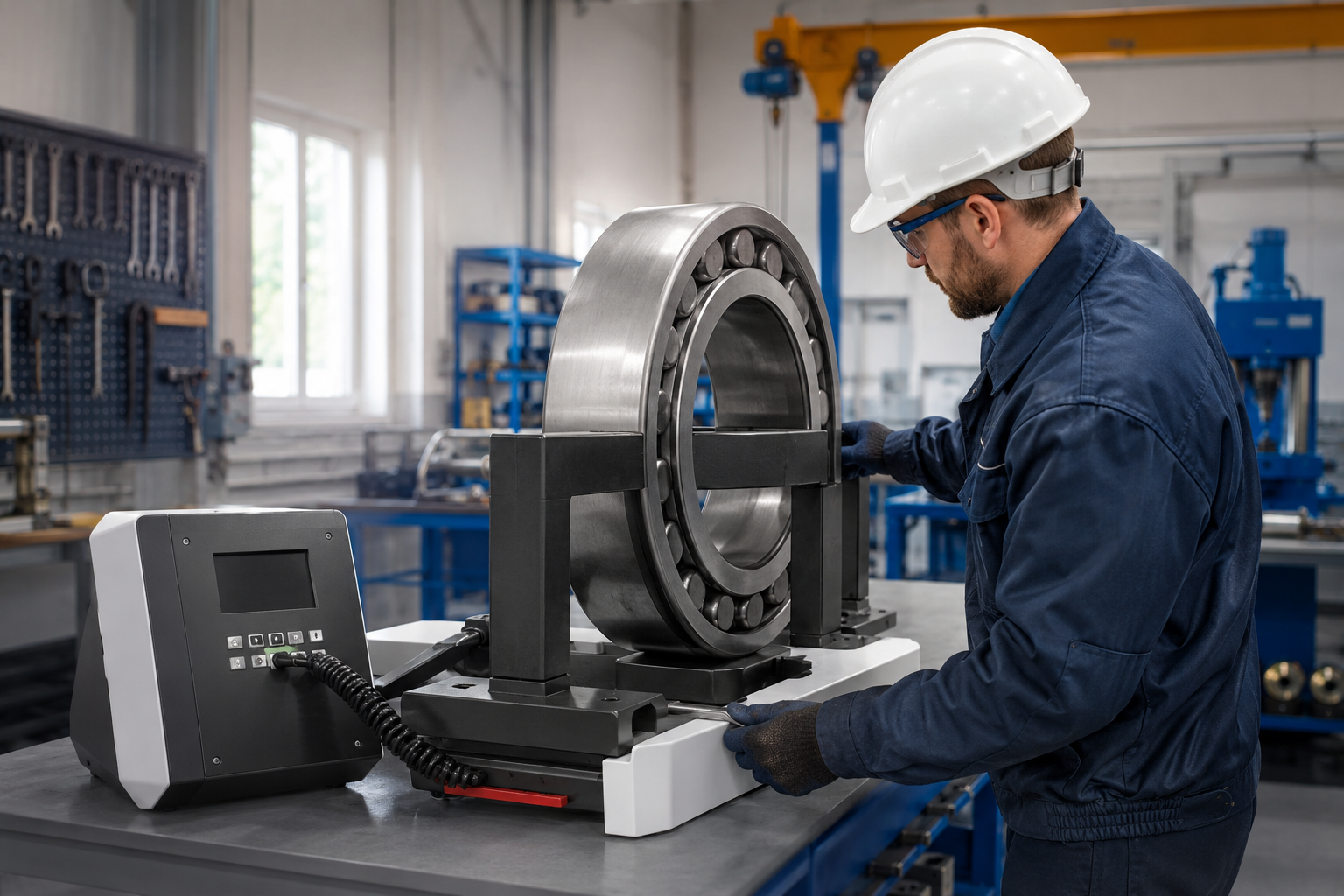
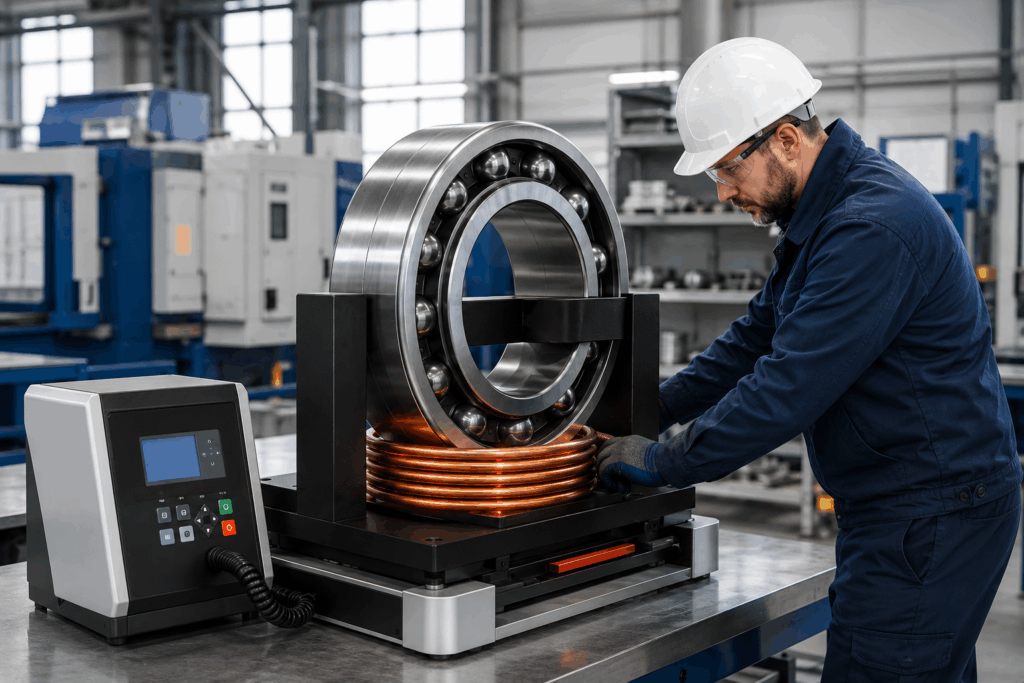
Buying a bearing induction heater based only on price or kW rating can create expensive problems later. An undersized heater may take too long to reach the required temperature, while an unsuitable system can cause inconsistent heating, production delays or unnecessary energy consumption.
The right equipment should match the bearing dimensions, weight, material, required temperature, heating time, operating environment and frequency of use.
For manufacturers, maintenance teams and industrial buyers, the objective is simple: achieve controlled thermal expansion without damaging the bearing or compromising the installation process.
The best bearing induction heater is not necessarily the most powerful model. It is the one correctly matched to your application.
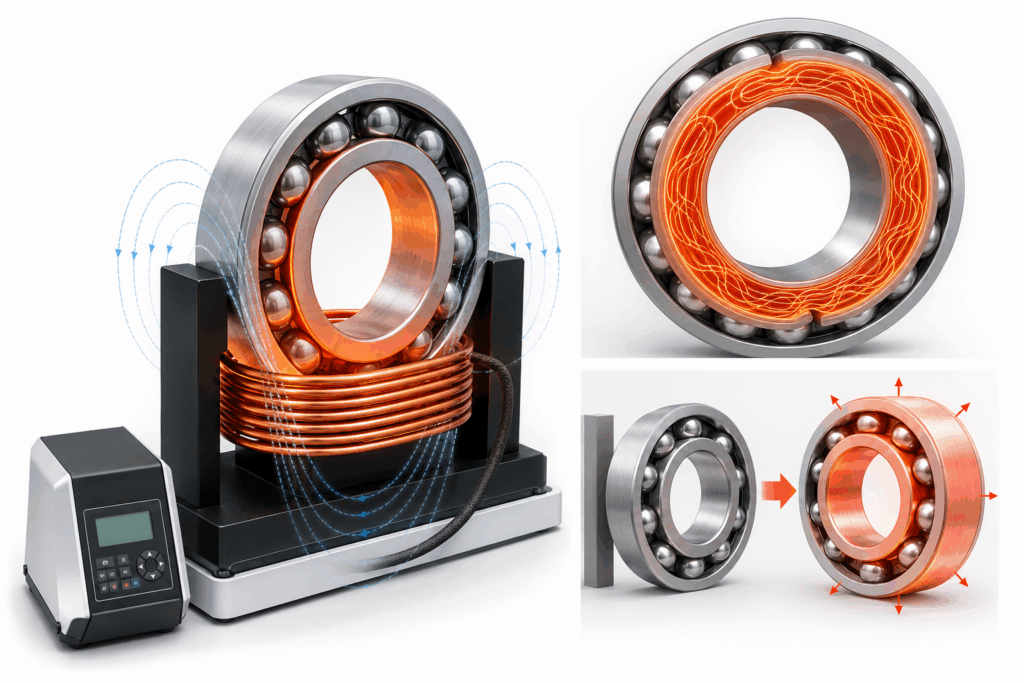
A bearing induction heater uses electromagnetic induction to heat a conductive metal component without direct flame or contact heating. Learn more about how electromagnetic induction works in industrial applications.
The basic process is:
This controlled approach is particularly useful for interference-fit applications where forcing a cold bearing onto a shaft could damage precision components.
For a deeper explanation, see our detailed guide on the working principle of bearing induction heaters.
When evaluating a bearing heating machine, avoid looking at one specification in isolation.
A practical selection process should consider:
| Selection Factor | What to Check | Why It Matters |
|---|---|---|
| Bearing dimensions | Bore, OD, width | Determines equipment compatibility |
| Bearing weight | Maximum component weight | Determines required heating capacity |
| Power | kW rating | Influences heating speed |
| Temperature | Required operating temperature | Prevents overheating |
| Heating time | Required cycle time | Important for production efficiency |
| Frequency | Operating frequency | Affects heating characteristics |
| Demagnetisation | Automatic or application-dependent | Helps prevent residual magnetism |
| Inductor design | Fixed, flexible or pin | Determines component compatibility |
| Portability | Fixed or mobile | Matches workshop requirements |
| Duty cycle | Occasional or continuous | Determines equipment suitability |
| Support | Installation and technical assistance | Reduces operational risk |
Related Reading:
The first question to ask is: What are the largest and smallest bearings you need to heat?
Collect the following specifications before contacting a supplier:
Do not size the machine only around the bearing you use most frequently. If your maintenance department occasionally handles significantly larger bearings, the heater should either accommodate them or have a clearly defined alternative process.
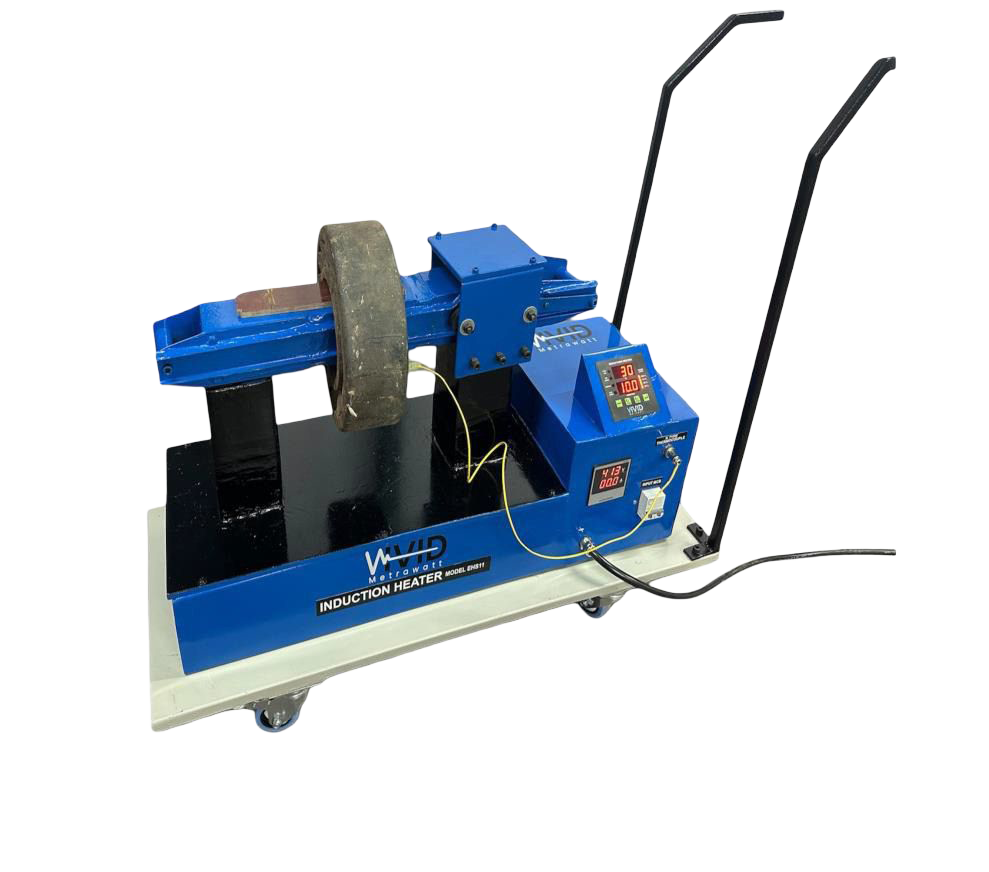
For example, Vivid Metrawatt’s 22 kW induction heater is designed for applications including bearing mounting, shrink fitting and component heating, with the manufacturer specifying bearing/component applications up to approximately 100 kg for that model.
For larger components, higher-capacity equipment may be more appropriate.
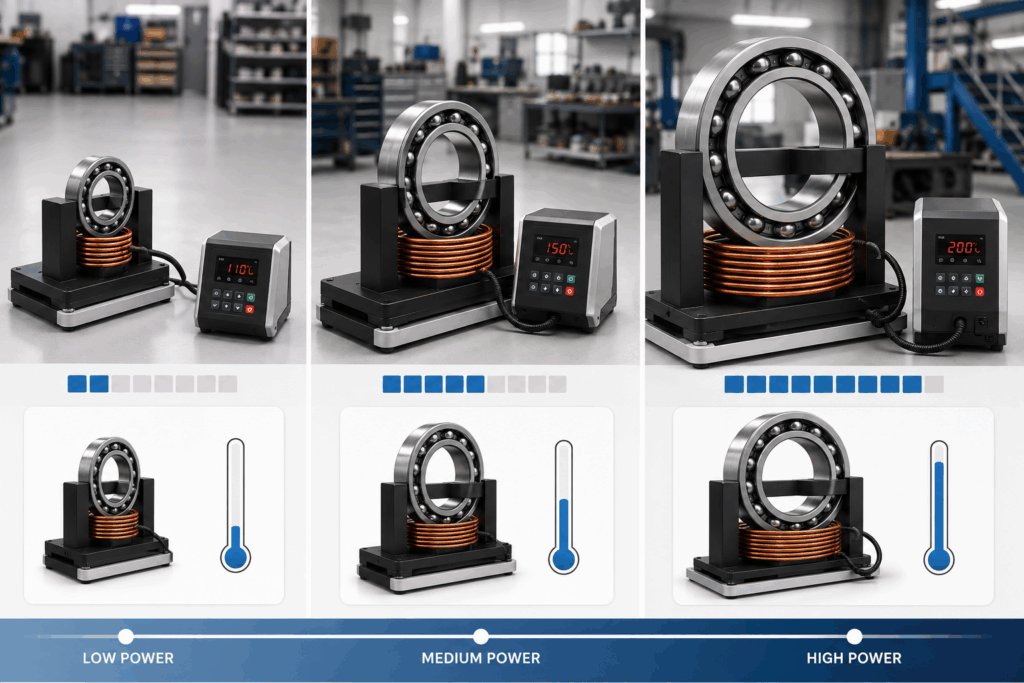
Power is one of the most important specifications when selecting an industrial induction heater.
However, higher kW does not automatically mean better performance.
The required power depends on:
A simplified heat-energy relationship is:
P ∝ (m × Cp × ΔT) / t
Where:
A heavier bearing requires more energy. A shorter heating cycle requires greater power.
Our detailed guide on choosing the right induction heater power in kW provides a more practical approach to sizing equipment.
An underpowered system can result in:
An unnecessarily powerful machine can increase:
The goal is to select sufficient power with an appropriate operating margin—not simply the highest available rating.
Temperature control is critical when heating precision bearings.
A bearing should be heated according to the bearing manufacturer’s specifications and the machine manufacturer’s installation requirements. The heater should therefore provide a reliable way to monitor and control temperature.
Look for:
Temperature control becomes especially important when bearings contain seals, special lubricants or temperature-sensitive components.
Never assume that every bearing should be heated to the same temperature. Always verify the recommended temperature with the bearing manufacturer or equipment OEM.
Induction heaters are available with different operating configurations and frequencies.
Frequency affects how electromagnetic energy couples with the workpiece and therefore influences heating depth and application suitability.
For bearing applications, the ideal configuration depends on whether you are:
For a broader explanation, see our detailed guide to low-frequency vs. high-frequency induction heating.
Vivid Metrawatt’s MF Quick-Heater range uses medium-frequency technology and supports fixed, flexible and pin-inductor configurations for different mounting and dismounting applications.
Ask the supplier to recommend the frequency and inductor configuration based on your actual component rather than selecting solely from a catalogue specification.
Demagnetisation is an important consideration when purchasing bearing heating equipment.
The induction heating process can leave residual magnetism in ferromagnetic components depending on the equipment and application. Residual magnetism can attract ferrous particles, which may be undesirable in precision bearing applications.
Therefore, ask:
This should be considered alongside temperature control rather than treated as an optional afterthought.
Important: Vivid Metrawatt specifies automatic demagnetisation for its bearing induction heater series, while demagnetisation for MF Quick-Heater models can be application-dependent. Confirm the exact configuration required for your component before purchasing.
Where will the heater be used?
This question can significantly change the right buying decision.
A portable or compact system may be preferable because technicians may need to move the equipment between machines.
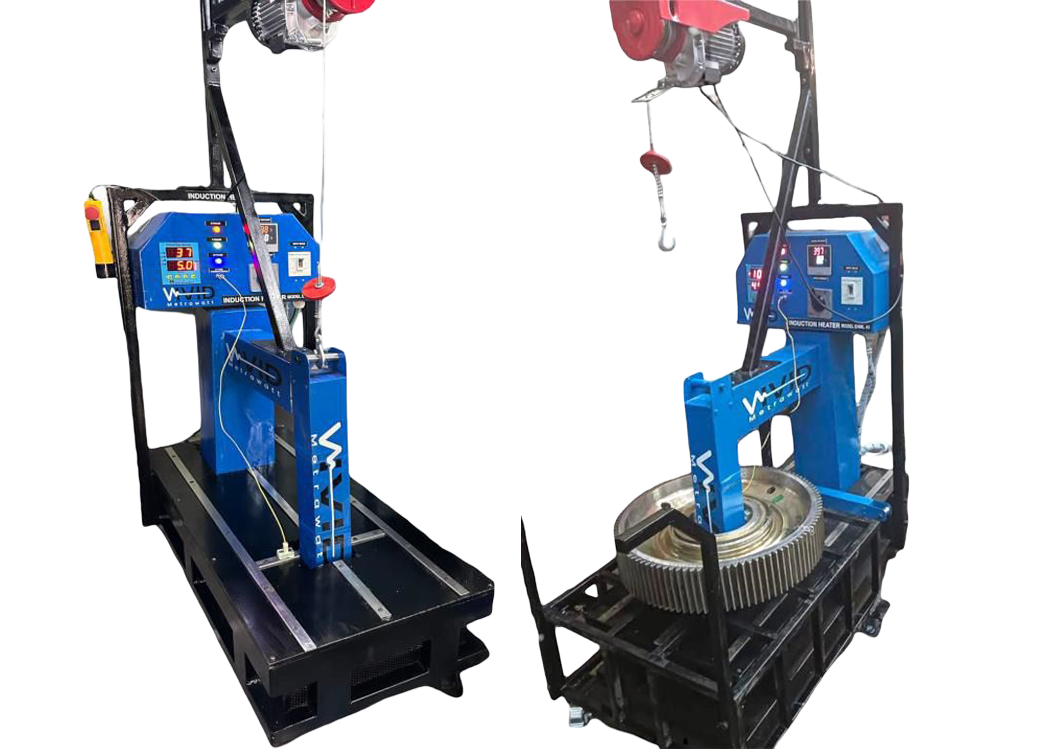
A fixed installation may provide better workflow integration, repeatability and accessibility.
Flexible inductors can be particularly useful because they can accommodate components that are not perfectly cylindrical or are difficult to position over a conventional yoke.
Vivid Metrawatt’s MF Quick-Heater range is designed around flexible and fixed inductor configurations, making it suitable for a range of mounting, dismounting and preheating applications.
Related: Read our complete guide to induction heating shrink fitting for another precision assembly method.
A machine used to heat two bearings per month has very different requirements from one used to heat hundreds of components every week.
Before buying, estimate:
Prioritise:
Prioritise:
This distinction can prevent businesses from overbuying equipment that exceeds their requirements—or underbuying equipment that cannot keep up with production.
The purchase price is only one part of the total cost of ownership.
A better evaluation includes:
Total cost of ownership = purchase cost + energy + maintenance + downtime + operator time
Induction heating can offer operational advantages over conventional heating approaches because heat is generated directly within the conductive workpiece rather than relying on a flame, heated oil or external heating surface.
For a broader comparison, read our article on induction heating vs. resistance heating.
A modern industrial heating system should be evaluated for:
For detailed information, see our comprehensive guide to safety features in induction heaters.
For applications where flame-based heating is still being considered, our comparison of induction heater vs. gas torch heating explains the key operational differences.
Before requesting a quotation, prepare the following information:
Providing this information allows the manufacturer to recommend a configuration instead of simply quoting a standard machine.
The cheapest machine may not provide the required capacity, temperature control or service support.
A kW rating should be considered alongside bearing weight, temperature rise and heating time.
Always size the equipment around the actual range of components you expect to heat.
The generator is only part of the system. The inductor configuration can have a major impact on how effectively a component is heated.
Check the required voltage, phase, current and connection capacity before purchasing.
Different bearings and applications have different temperature requirements. Follow the bearing manufacturer’s recommendations.
Industrial equipment is a long-term investment. Installation assistance, operator training, troubleshooting and after-sales service can have significant value.
A simple decision framework can help.
Vivid Metrawatt manufactures industrial testing and heating equipment with a focus on motor winding testing and bearing induction heating solutions.
Its induction heating range is designed for applications including:
The company offers multiple power ratings to match different bearing sizes and applications:
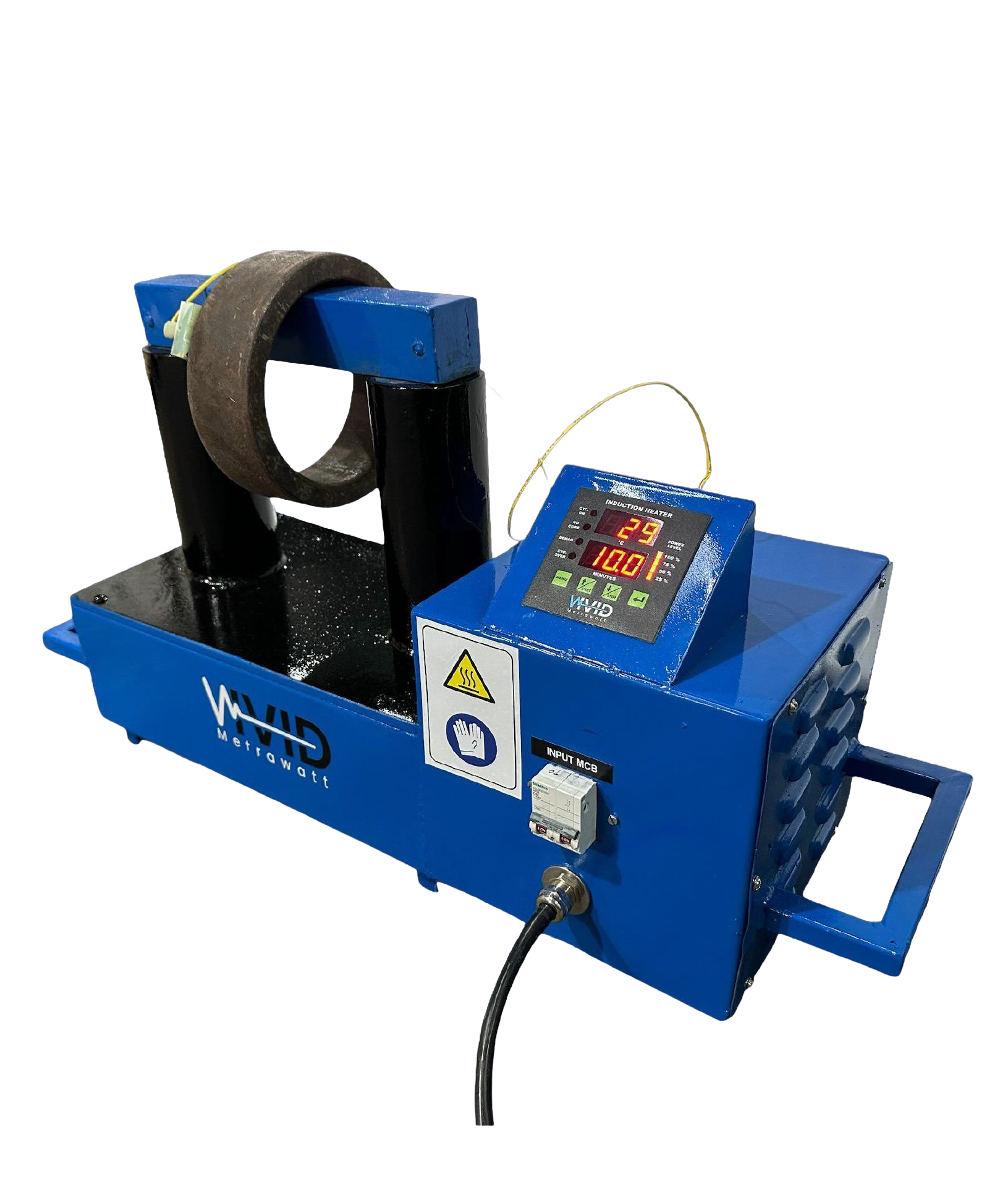
Vivid Metrawatt 33 kW induction heater is one example of the company’s MF Quick-Heater range, supporting mounting, dismounting and preheating applications.
The company also provides technical consultation and after-sales support, allowing buyers to discuss their component specifications before selecting equipment.
For industrial buyers, this application-based approach is more valuable than selecting a heater from a generic kW chart.
Additional Resources:
Bearing size and weight are among the first specifications to evaluate, but they should be considered together with required heating temperature, heating time, frequency, inductor configuration and operating frequency.
There is no universal kW rating. Required power depends on bearing mass, material, temperature rise, heating time and equipment efficiency. A supplier should size the heater around your actual application.
Yes. Suitable induction heating systems can be configured for bearing-ring and component dismounting. The inductor arrangement and heating profile depend on the component.
The correct temperature depends on the bearing design, fit, material and manufacturer’s specifications. Always follow the bearing manufacturer’s recommended installation temperature rather than applying a generic value.
It can be very important for bearing applications because residual magnetism can attract ferrous contaminants. However, whether automatic demagnetisation is required depends on the equipment and application, so confirm the specification before purchase.
No. A higher-power machine may be unnecessary for small or low-volume applications. The ideal heater provides enough power to achieve the required temperature within the desired cycle time while remaining practical for the operating environment.
Provide the bearing bore, outside diameter, width, weight, material, required temperature, desired heating time, quantity per day, application and available electrical supply. Photos or drawings can also help the manufacturer recommend the appropriate configuration.
Choosing the right bearing induction heater requires more than comparing prices or selecting the highest kW rating. The best equipment is the one that matches your bearing dimensions, weight, heating temperature, cycle time, production volume, inductor configuration and operating environment.
For occasional maintenance, portability and ease of use may be the priority. For demanding production environments, heating speed, repeatability, temperature control, duty cycle and long-term operating costs become more important.
Before purchasing, provide the manufacturer with your actual bearing specifications and application requirements. This allows the equipment to be sized correctly and reduces the risk of investing in a machine that is either underpowered or unnecessarily oversized.
If you are evaluating a bearing induction heater for mounting, dismounting or shrink-fitting applications, Vivid Metrawatt can help you identify the appropriate heating solution based on your component specifications and operating requirements.
Explore these additional guides for complementary heating and testing solutions:
Bearing & Component Heating:
Equipment Selection & Comparison:
Safety & Best Practices:
Share your bearing size, weight, required temperature and application with Vivid Metrawatt and request a suitable industrial heating solution.
Request a Bearing Induction Heater Quote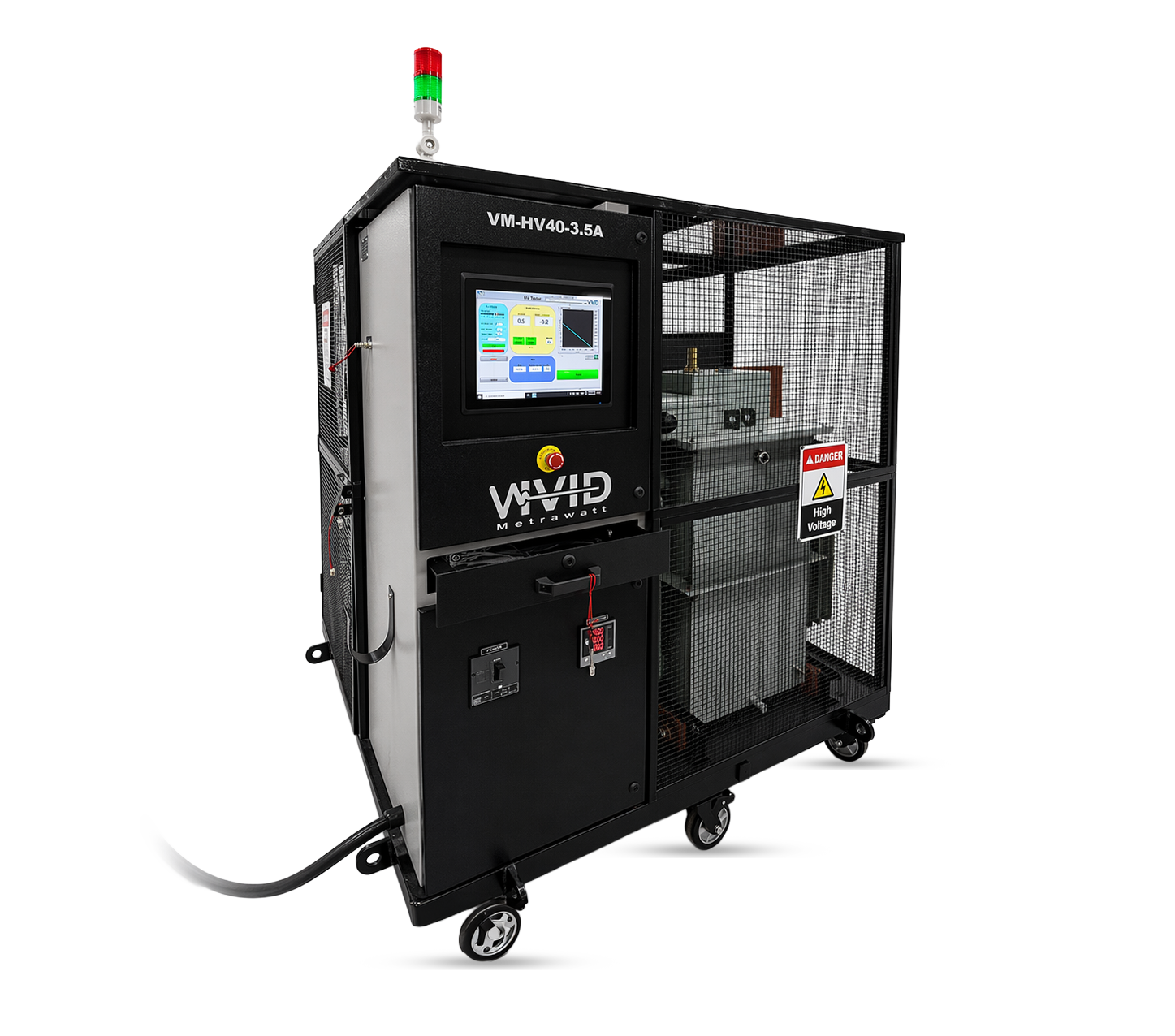

![Surge Testing for Wind Turbine Generators: Complete Guide [2026]](https://vividmetrawattglobal.com/wp-content/uploads/2026/09/a_wide_cinematic_industrial_outdoor_scene_at_an_o.webp)