
Choosing the wrong induction heater power rating is one of the most costly mistakes in industrial maintenance. Under-powered units stall mid-process; over-specified machines waste capital budgets. If you have ever watched a bearing fitting job drag on for 45 minutes because the heater could not reach the required temperature — or seen a technician crack a precision component by applying heat too fast — you already know the consequences.
This guide gives you a clear, formula-driven framework for matching induction heater kW output to your real-world application — covering bearing fitting, shaft heating, gear mounting, and more.
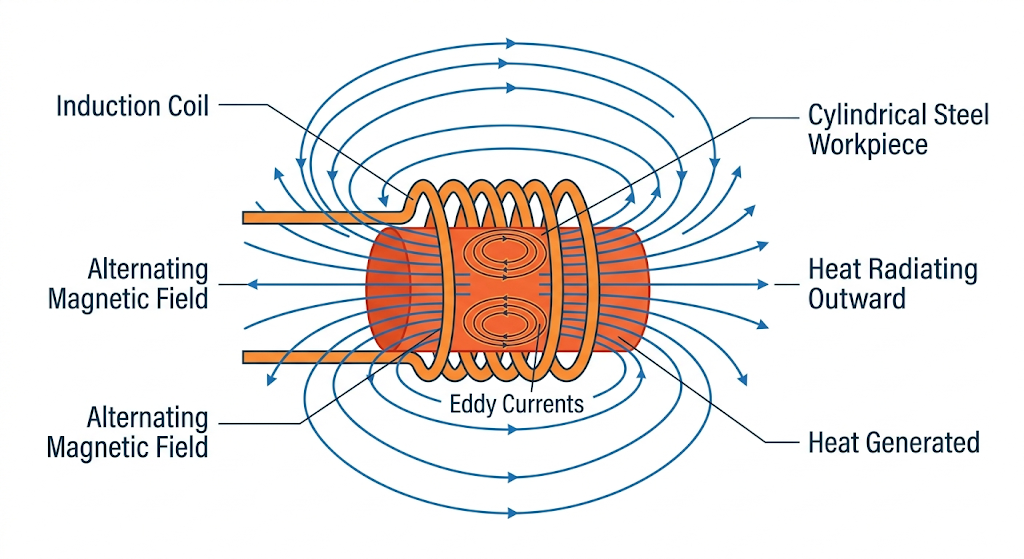
Induction heater power — expressed in kilowatts (kW) — defines the rate at which electromagnetic energy is converted into heat inside a conductive workpiece. Higher kW means faster heating cycles, shorter process times, and the ability to handle larger or denser components.
For industrial applications, power selection directly impacts:
Explore our full range of industrial induction heaters to find models rated from 10 kW to 100 kW+ for every application type.
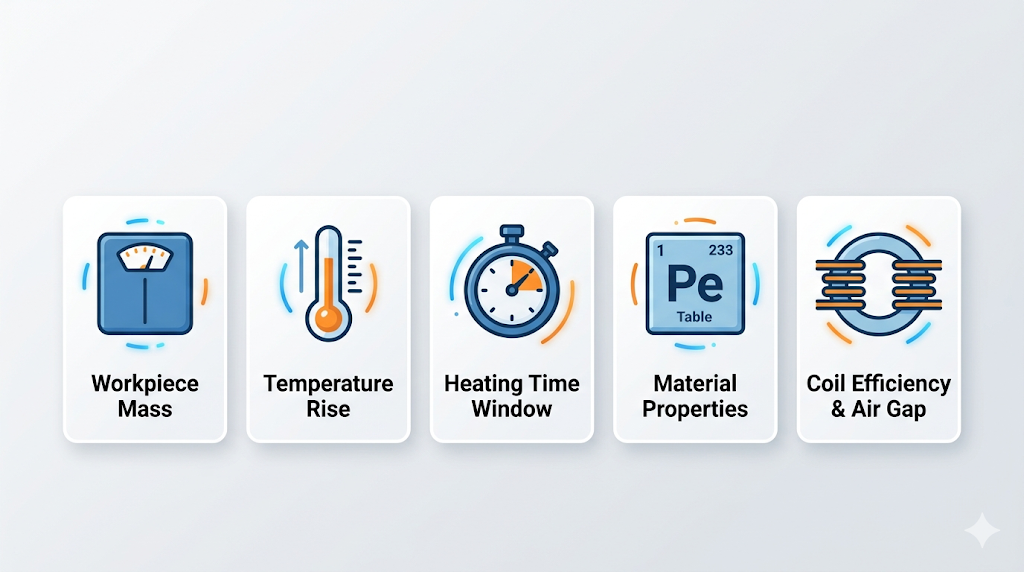
No single number fits every scenario. Your ideal kW rating is the product of several interdependent variables:
The heavier the component, the more energy it stores and the more power you need to raise its temperature within an acceptable time window. A 5 kg bearing race requires significantly less power than a 60 kg gear hub.
Most bearing fits require a temperature rise of 80°C–120°C above ambient. Larger interference-fit components may need up to 150°C. The higher the target delta-T, the greater the energy demand.
Production-line constraints often dictate a maximum cycle time. If your maintenance window allows 10 minutes but a 10 kW heater requires 25 minutes for a given component, you need a higher-rated model.
Steel has a specific heat capacity of approximately 0.49 kJ/kg·°C. Stainless steels and alloy steels vary slightly. Aluminium and non-ferrous components heat differently and may require specialised coils.
Not all energy generated by the heater reaches the workpiece. Coil-to-component coupling efficiency — determined by the gap between the inductor coil and the workpiece — typically ranges from 60% to 85%. A larger air gap means lower efficiency and a higher effective power requirement.
📖 Read our guide on common induction heater mistakes to avoid to understand how improper coil selection leads to overheating and component damage.
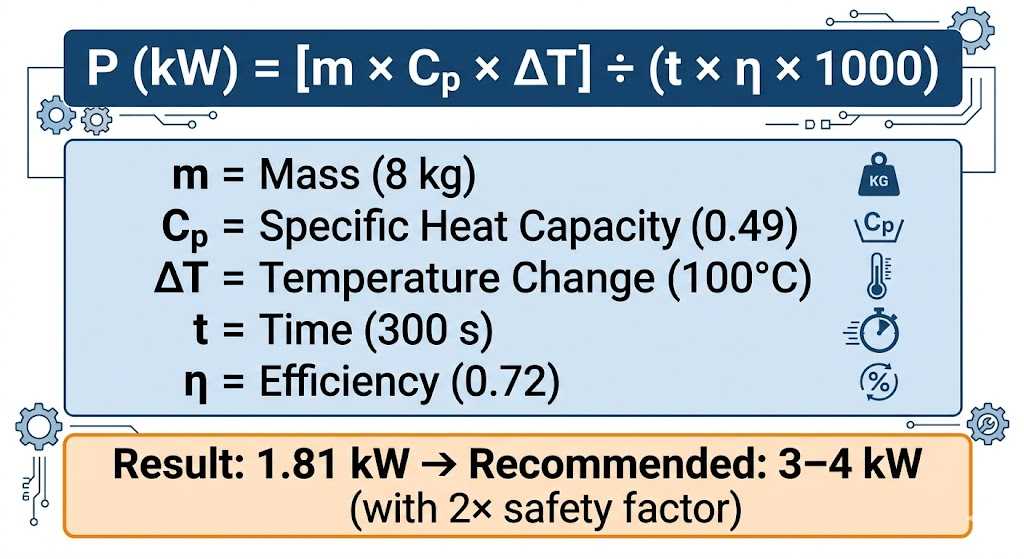
Formula:
P (kW) = [m × Cp × ΔT] ÷ (t × η × 1000)
Where:
| Variable | Description |
|---|---|
m | Mass of workpiece in kilograms |
Cp | Specific heat capacity (kJ/kg·°C) — ~0.49 for carbon steel |
ΔT | Required temperature rise in °C |
t | Required heating time in seconds |
η | System efficiency (typically 0.65–0.80 for portable induction heaters) |
Inputs: Bearing mass: 8 kg | Material: Carbon steel | Required ΔT: 100°C | Target time: 300 seconds | Efficiency: 0.72
P = [8 × 0.49 × 100] ÷ (300 × 0.72 × 1000)
  = 392 ÷ 216
  = 1.81 kW minimum
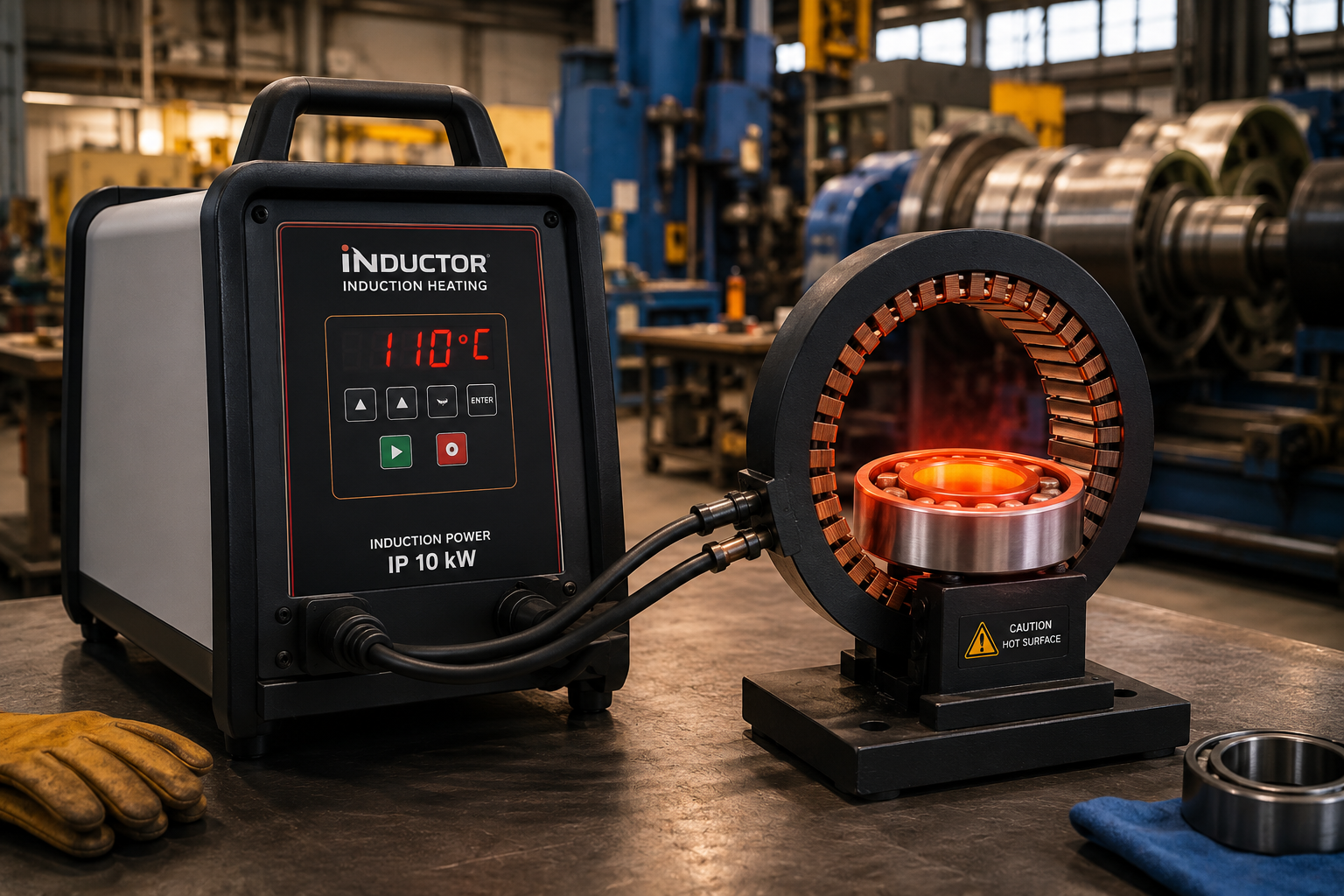
In practice, apply a safety factor of 1.5× to 2× to account for heat losses, coil variation, and ambient temperature. This brings the recommended power to approximately 3–4 kW. A 10 kW heater would comfortably handle this job while completing it in under 5 minutes.
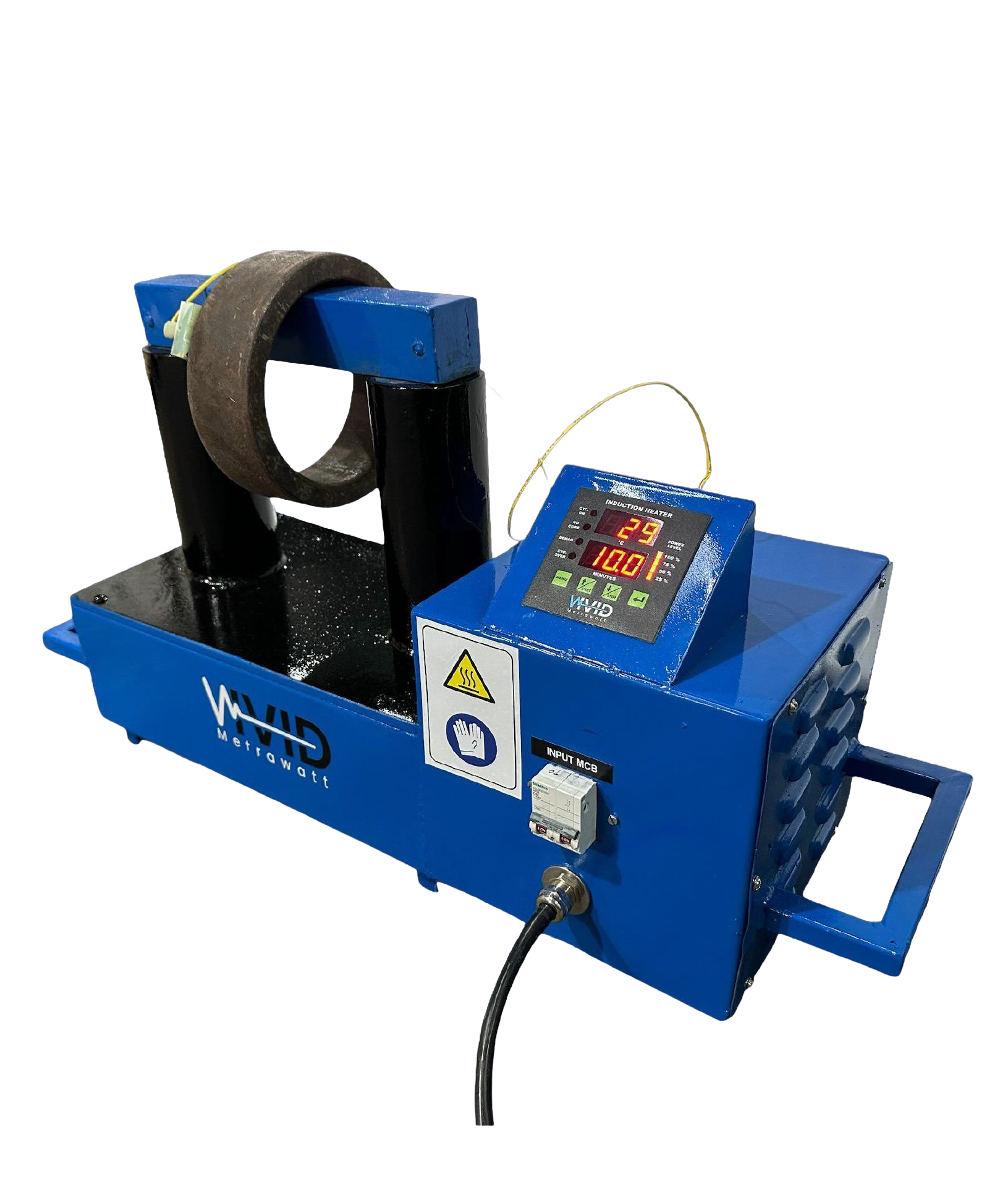
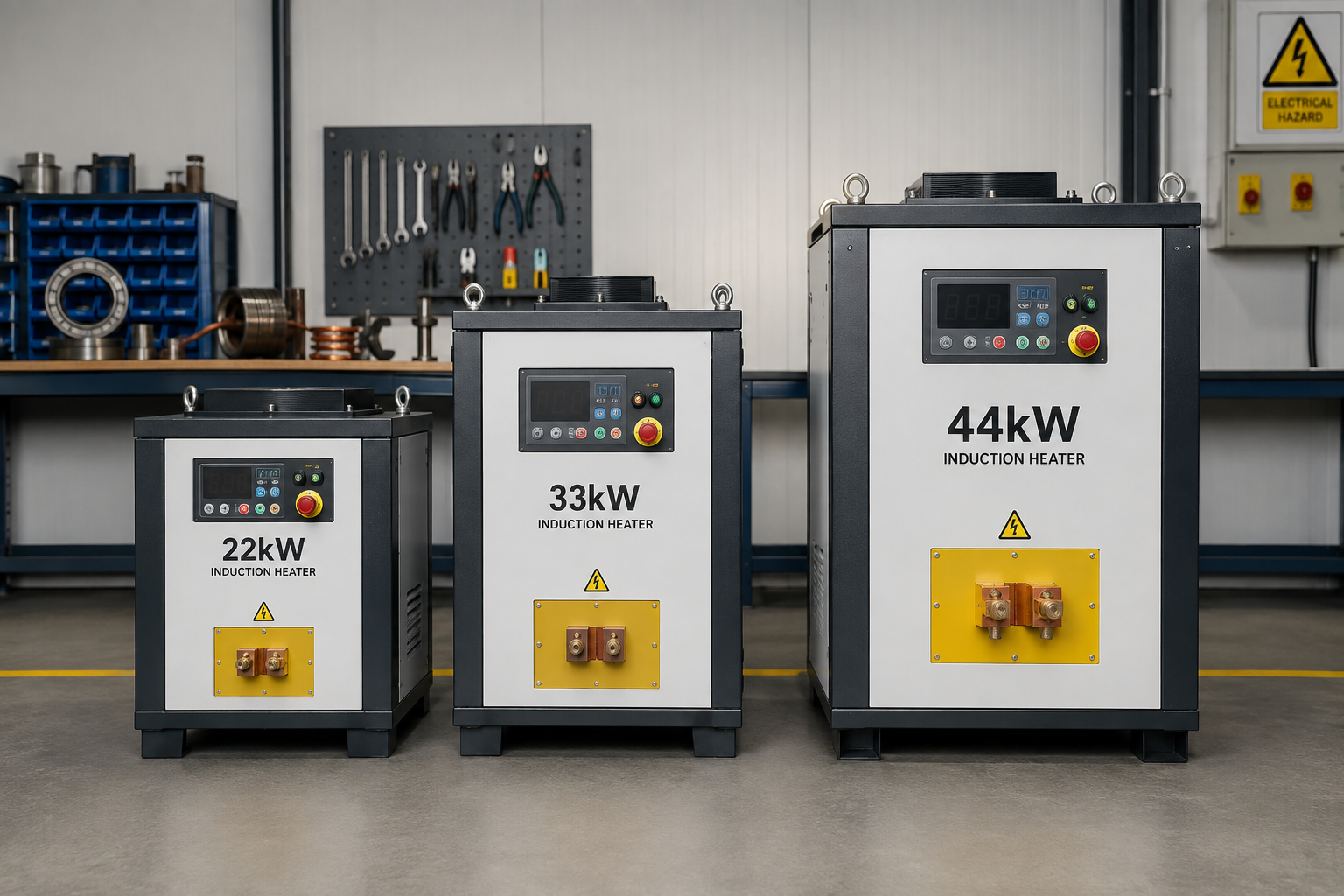
🔧 Our 22 kW induction heater is an industry-preferred choice for medium to large bearing and gear heating tasks, offering precision temperature control and rapid cycle times.
| Application | Component Weight | Temp Rise Required | Recommended Power |
|---|---|---|---|
| Small bearing fitting | 1–5 kg | 80–100°C | 10–15 kW |
| Medium bearing fitting | 5–20 kg | 100–120°C | 22–33 kW |
| Large bearing / gear | 20–60 kg | 100–150°C | 33–44 kW |
| Heavy shaft heating | 60–120 kg | 120–150°C | 44–60 kW |
| Industrial coupling removal | 15–40 kg | 100–130°C | 22–44 kW |
| Pipe and tube preheating | Variable | 300–600°C | 33–60 kW |
🔧 Browse our 33 kW induction heater and 44 kW induction heater for heavy-duty industrial environments — both models feature automatic demagnetisation and digital temperature control.
| Power Rating | Ideal For | Typical Cycle Time (10 kg part) | Temperature Range |
|---|---|---|---|
| 10 kW | Light bearings, small bushings | ~8–12 min | Up to 230°C |
| 22 kW | Medium bearings, gears, couplings | ~4–6 min | Up to 230°C |
| 33 kW | Large bearings, heavy shafts | ~2–4 min | Up to 230°C |
| 44 kW | Very large components, batch heating | ~1–3 min | Up to 230°C |
📖 For a deeper look at pitfalls, see our dedicated article: Top Induction Heater Mistakes and How to Avoid Them.
Vivid Metrawatt induction heaters are tested and rated to international standards. Each model delivers:
Learn more about our complete induction heater product range and connect with our technical team via the Contact page for application-specific recommendations.
Our resources section also contains datasheets and application notes for every heater model.
For most maintenance applications involving bearings between 5 kg and 25 kg, a 22–33 kW induction heater provides the ideal balance of speed and precision. Always verify using the power calculation formula described above.
Technically yes, but extended heating cycles risk thermal diffusion into adjacent components and potential metallurgical damage. Fast, controlled heating is always the safer and more reliable approach.
Higher-rated heaters consume more power per unit time but generally complete jobs faster. The total energy consumption (kWh) is often similar — sometimes lower — because the cycle duration is shorter.
A 33 kW model is the most versatile choice for general industrial workshops handling components up to 60 kg. For very large components, 44 kW or higher is necessary.
Annual preventive maintenance is recommended, including coil inspection, connection checks, and functional testing of protection circuits.
Selecting the right induction heater power is not guesswork — it is engineering. Use the formula, account for efficiency losses, apply a safety margin, and match the kW rating to the heaviest component you regularly process. A correctly specified induction heater pays for itself through faster jobs, fewer damaged components, and longer equipment life.
Whether you are replacing a legacy gas torch setup or building a new maintenance facility, Vivid Metrawatt has a tested, field-proven induction heater for every power class.
✅ Tell us your component weight, material, and temperature requirement
✅ Our engineers will recommend the exact kW model for your application
✅ Free technical consultation — no obligation