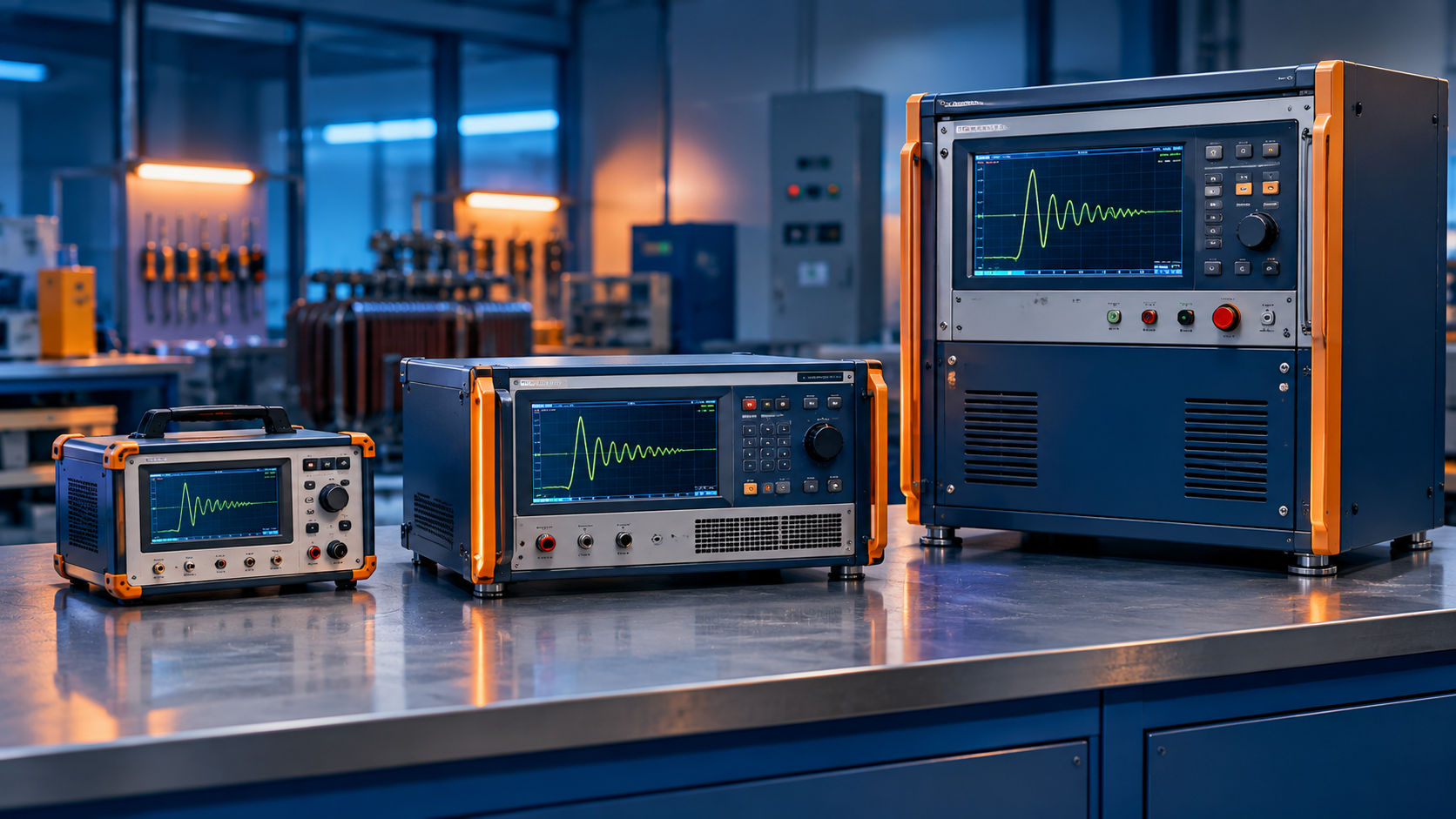


Every year, technicians are injured on test benches that were never unsafe by design — only unsafe by habit. A skipped ground check, a bypassed interlock, a rushed shift-end test: each looks harmless until it isn’t. Working safely with high voltage test equipment isn’t about slowing your team down — it’s a repeatable system that protects people first and still gets the job done on schedule.
High voltage test equipment exists to find weaknesses in insulation before they become field failures — but the same voltage that reveals a weak winding can seriously injure an operator if procedures slip. Facilities that treat safety as a checklist item rather than a culture see it in their incident logs. Before diving into procedure, it helps to understand exactly what a high voltage test involves and why the energy levels involved demand respect every single cycle.
Before you can control a risk, your team needs to see it clearly. The main hazards on any HV test bench are:
Different test types carry different specific risks. For example, AC hipot vs DC hipot testing involves different residual-charge behavior, and hipot testing in a digital surge tester can leave capacitive elements charged well after the visible test cycle ends if discharge isn’t confirmed.
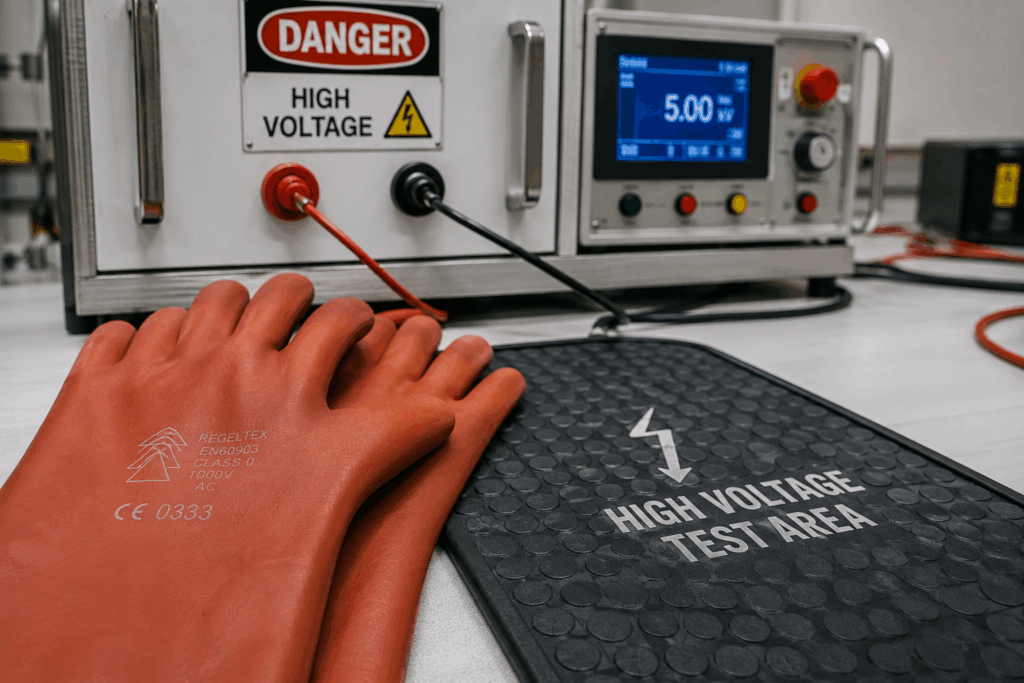
No test should begin without the right protective equipment in place:
PPE is your last line of defense, not your first — it exists to protect against the failure of every other control, not to replace them.
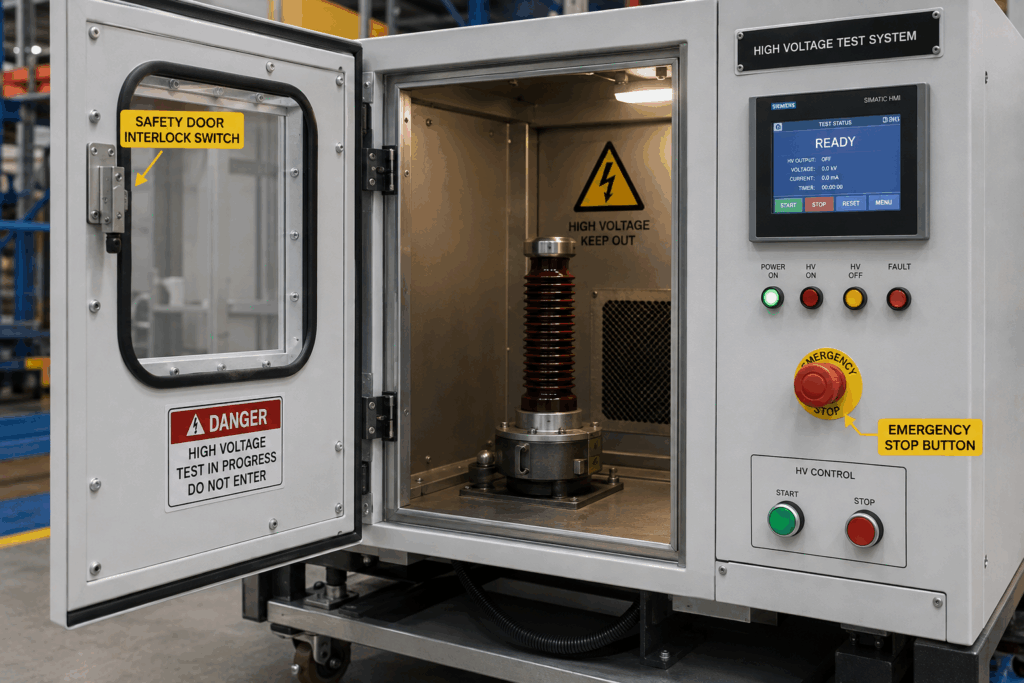
Modern testers are engineered with built-in protections precisely because human error is inevitable under time pressure. These features exist for a reason — never disable or “jump” them to save time:
Test chambers and panel doors should cut voltage instantly on opening. If yours doesn’t, or the interlock has been bridged “temporarily,” stop testing until it’s repaired.
Every high voltage tester should automatically ground the test object at the end of a cycle. Confirm this on your unit, especially after any maintenance — our guide on how to maintain and calibrate your digital surge tester covers exactly what to check.
Keeping both hands clear of the test object during energization is one of the simplest ways to prevent contact injuries. See how this is implemented in our guide to footswitch hands-free surge testing.
Every operator, at every station, should be able to reach an e-stop without moving their feet.
Key takeaway: If a safety feature is inconvenient, that’s a workflow problem to solve — not a reason to disable the feature.
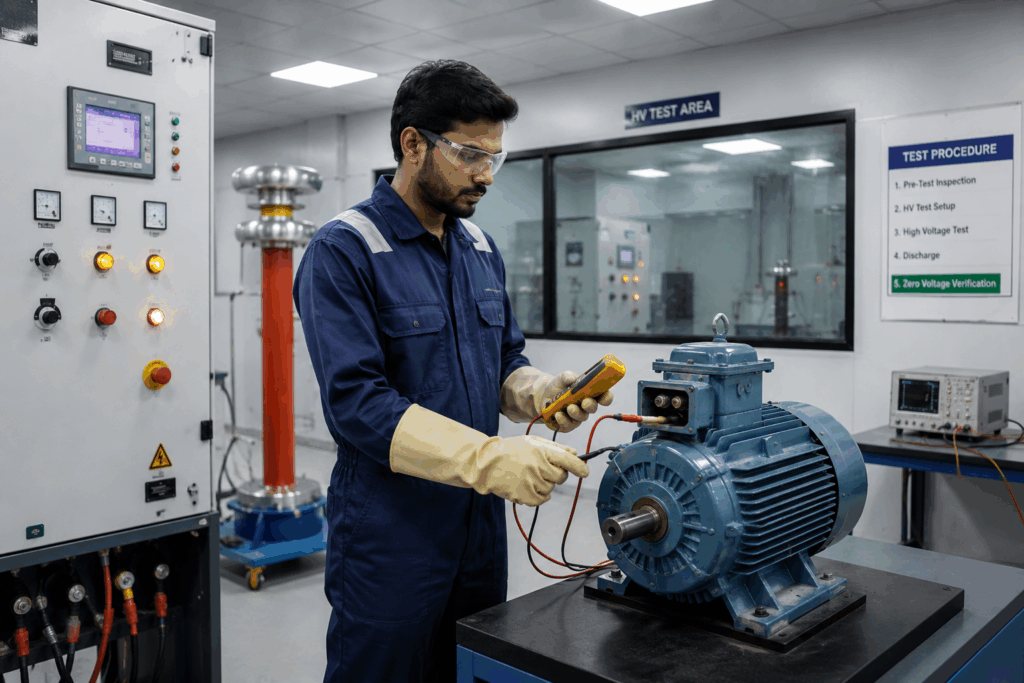
Before testing:
During testing:
After testing:
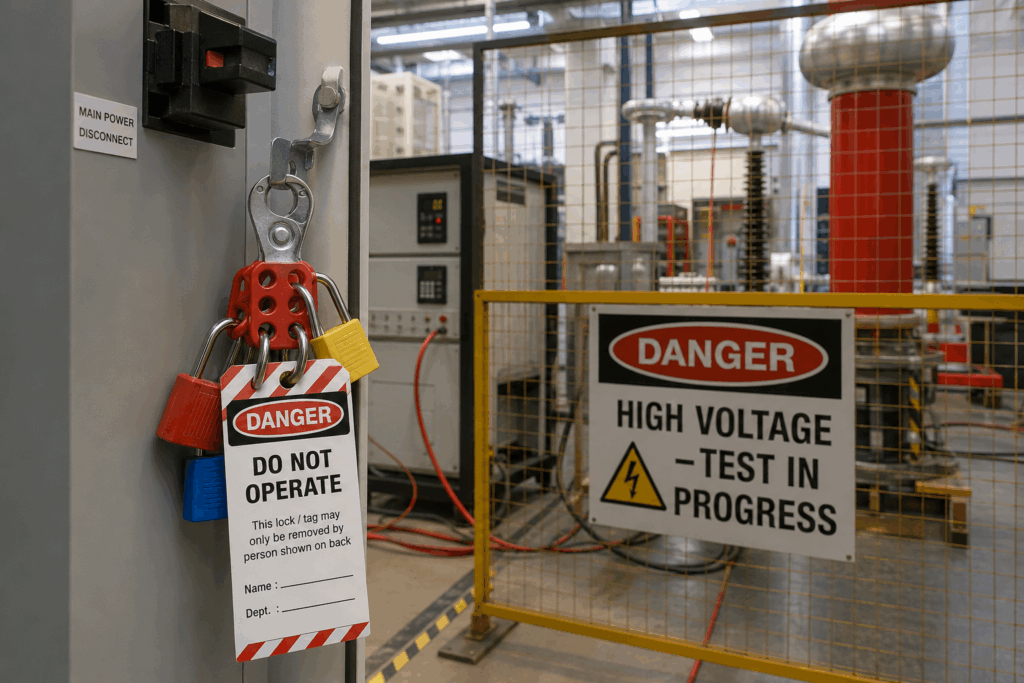
Every HV test setup needs a documented isolation procedure:
This matters even more for higher-energy testing. Our guide on partial discharge testing and how to perform a megger test both cover isolation steps specific to those test types.
Equipment safety features only work if operators understand why they matter. A solid training program covers:
An out-of-calibration tester isn’t just an accuracy problem — it’s a safety problem, because safety thresholds and cutoffs depend on accurate readings. Build a maintenance rhythm around:
| Stage | Check | Frequency |
|---|---|---|
| Pre-shift | PPE inspection (gloves, mats, footwear) | Every shift |
| Pre-test | Interlock & e-stop function check | Every setup |
| During test | Boundary clearance, no direct contact | Every cycle |
| Post-test | Manual zero-voltage verification | Every cycle |
| Periodic | Full calibration | Per manufacturer schedule |
| Periodic | Operator refresher training | Annually or on new equipment |
Residual or induced voltage after a test cycle is one of the most underestimated risks — always manually verify zero voltage even after automatic discharge.
Yes — automation reduces variability in test sequencing and timing, but operators still need training and supervision; automation is a safety aid, not a replacement for procedure.
PPE and interlocks should be checked every shift; full calibration should follow the manufacturer’s recommended interval, typically annually.
Both involve elevated voltage and require the same core precautions, though the specific waveform and discharge behavior differ — see our surge tester vs megger test comparison for the distinctions.
Working safely with high voltage test equipment comes down to respecting three things every single cycle: the hazard, the equipment’s built-in protections, and the procedure — in that order. Facilities that treat safety features as non-negotiable, train operators properly, and keep equipment calibrated see fewer incidents and more consistent test results. Safety and reliable testing aren’t in tension — they’re the same discipline.
Talk to Vivid Metrawatt’s engineering team about testers with interlocks, auto-discharge, and footswitch operation built in from the ground up.
Get a Quote Today! →

![Surge Testing for Wind Turbine Generators: Complete Guide [2026]](https://vividmetrawattglobal.com/wp-content/uploads/2026/09/a_wide_cinematic_industrial_outdoor_scene_at_an_o.webp)