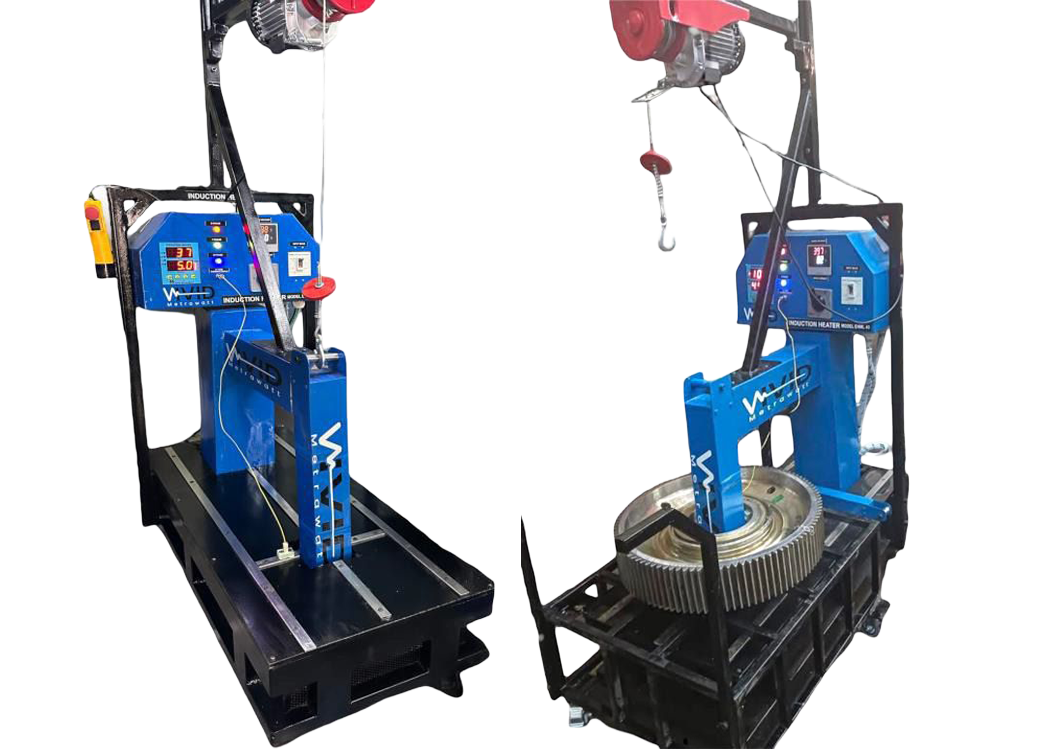
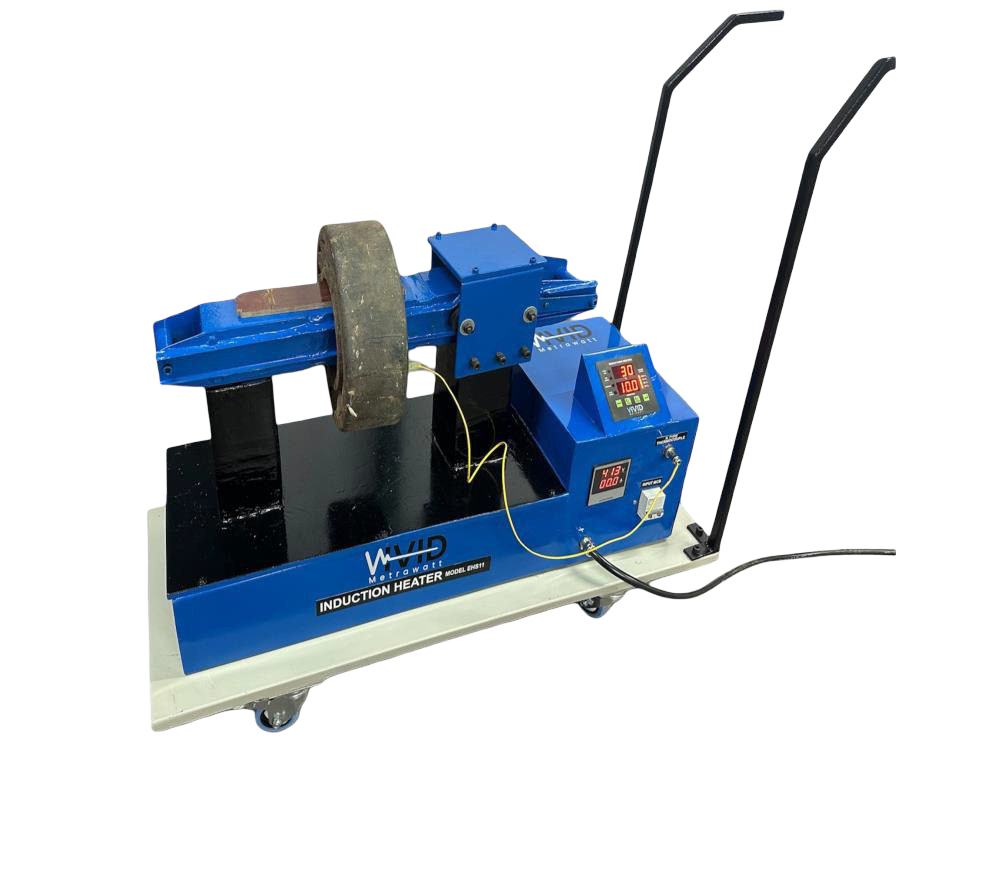
What Safety Features Should You Look for in an Induction Heater?
Oct, 09 2025
Last updated: [8/9/26]
Table of Contents
⚡ Quick Facts
Induction heating can exceed 1000°C in seconds, making automatic thermal shutdown the single most critical safety feature
Occupational EMF exposure is governed by ICNIRP 2010 guidelines — 1000 µT magnetic flux density and 10 kV/m electric field at 50 Hz — enforced in the EU via Directive 2013/35/EU
Core safety standard for induction heating equipment: IEC 60519-1 (general electroheat safety) and IEC 60519-3 (induction and conduction heating specific requirements)
Emergency stop systems should conform to ISO 13850; machinery risk assessment follows ISO 12100
Safety testing follows a tiered schedule: daily, monthly, and annual checks
Introduction
Purchasing an induction heater without adequate safety features puts your workforce at risk, exposes your facility to costly downtime, and could result in catastrophic equipment failure. One faulty component or missing protection system can lead to workplace injuries, fire hazards, or equipment damage. The solution lies in understanding which safety mechanisms are non-negotiable — and how they protect both your personnel and your investment in heating technology.
Why Safety Features Matter in Induction Heating
Induction heating systems generate intense electromagnetic fields and extreme temperatures, often exceeding 1000°C in seconds. Without proper safeguards, these powerful machines pose significant risks including electrical shock, thermal burns, electromagnetic interference, and fire hazards.
The Real Cost of Inadequate Safety
Workplace incidents involving industrial heating equipment typically carry costs across several categories: medical treatment, equipment downtime, regulatory penalties, and — where OSHA or equivalent national bodies are involved — formal citations under general workplace safety duty requirements. More importantly, worker safety should never be compromised for operational efficiency.
Key safety concerns include:
Thermal burns from accidental contact with heated components
Electrical hazards from high-voltage power supplies
Electromagnetic field exposure affecting medical devices or causing disorientation
Fire risks from overheating materials or faulty components
Equipment damage leading to production interruptions
Thermal management represents the first line of defense in induction heating safety. These systems prevent dangerous temperature escalations that could damage equipment or cause injuries.
Automatic Overheat Shutdown
The most critical safety feature is an automatic thermal shutoff that monitors system temperature in real time. When internal components exceed safe operating thresholds, the system immediately cuts power to prevent damage or fire.
What to look for:
Multiple temperature sensors positioned throughout the heating system
Rapid response time (typically under 0.5 seconds)
Manual reset requirement preventing automatic restart after shutdown
Clear visual and audible alarms alerting operators to thermal events
Cooling System Monitoring
Effective induction heaters incorporate forced-air or liquid cooling systems. Safety-conscious designs include monitoring for:
Coolant flow rate sensors
Coolant temperature monitoring
Low coolant level detection
Fan failure detection with automatic shutdown
Coil Temperature Protection
The heating coil itself reaches extremely high temperatures. Premium systems feature:
Thermocouple integration within or near the coil assembly
Temperature-based power modulation, reducing output before critical limits
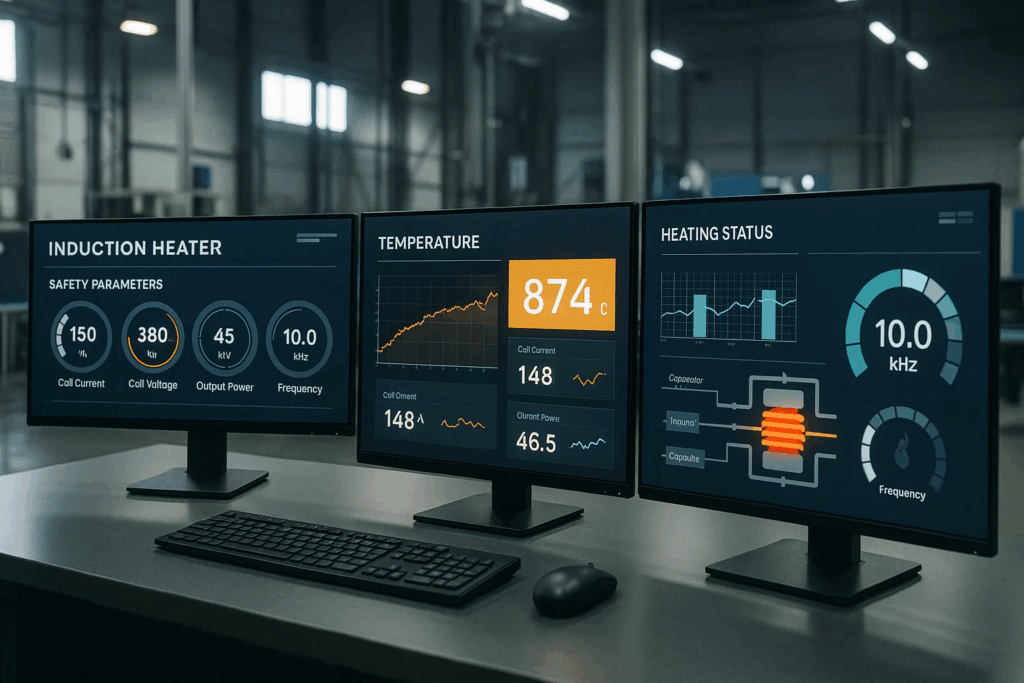
Thermal imaging displays showing real-time coil temperature distribution
Choosing the right power rating for your application also reduces thermal risk — an under-sized unit run at its ceiling for extended cycles is a common source of thermal stress. See How to Choose the Right Induction Heater Power (kW) for the sizing formula.
Electrical Safety Mechanisms
Induction heaters operate on high-voltage, high-frequency power that demands robust electrical protection to prevent shock hazards and system failures.
Ground Fault Protection
Ground fault circuit interrupters (GFCI) detect current leakage and immediately disconnect power when abnormal current paths are detected. This feature is mandatory for wet environments or portable applications.
Short Circuit Protection
Advanced induction heating systems include:
Fast-acting circuit breakers rated for induction heating applications
Electrical safety programmes in facilities operating this equipment are typically governed by workplace electrical safety standards such as NFPA 70E (US) or equivalent national arc-flash and shock-hazard frameworks, in addition to the equipment-level standards below.
Power Supply Isolation
Look for systems featuring:
Isolated power transformers preventing direct connection to mains voltage
Optical isolation in control circuits
Multiple layers of electrical insulation exceeding minimum standards
Emergency Stop Functionality
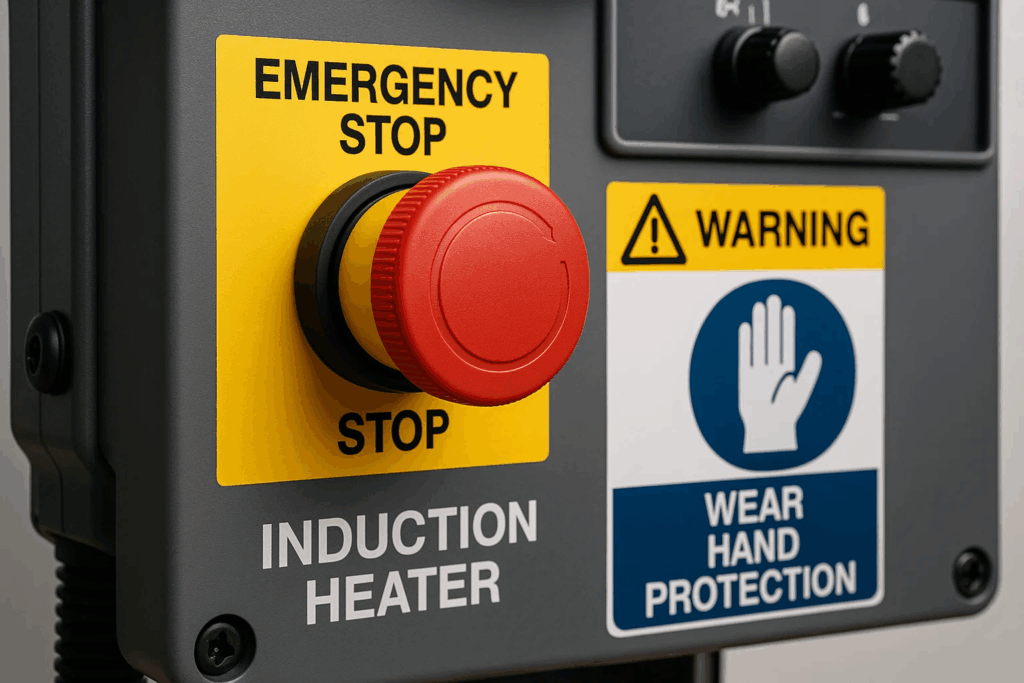
Every induction heater must include clearly marked emergency stop buttons that:
Immediately cut all power to heating circuits
Remain engaged until manually reset
Are easily accessible from multiple operator positions
Meet international safety standards — ISO 13850 (emergency stop function — principles for design)
Operator Protection Features
Beyond equipment protection, modern induction heaters incorporate features specifically designed to safeguard operators during daily use.
Physical Barriers and Guards
Quality systems include:
Protective enclosures around high-voltage components with interlocked access doors
Heat shields preventing accidental contact with hot surfaces
Clearance requirements maintaining safe distances from electromagnetic fields — ISO 13857 provides the reference framework for safety distances around hazard zones on industrial machinery
Lockout/tagout capabilities for safe maintenance procedures
Electromagnetic Field (EMF) Shielding
Induction heaters generate strong electromagnetic fields that can interfere with pacemakers and other medical devices. Occupational exposure to these fields is not just a manufacturer design consideration — it’s a regulated exposure category:
ICNIRP 2010 guidelines set the reference level for occupational exposure at 50 Hz at 1000 µT magnetic flux density and 10 kV/m electric field, with a contact current limit of 1 mA
In the EU, Directive 2013/35/EU turns these reference levels into legally enforceable action levels that employers operating induction heating equipment must assess against
Field studies of induction heating operators have measured flux densities in the range of roughly 0.03–0.5 mT at 1 metre from 1–10 kHz equipment, rising sharply at closer range — which is exactly why standoff distance, shielding, and posted zones matter more for induction heating than for most other industrial equipment
Essential EMF safety features include:
Shielded cables minimizing field radiation
Proper grounding systems reducing stray electromagnetic emissions
EMF measurement and documentation ensuring compliance with occupational exposure limits
Warning labels indicating areas of elevated electromagnetic fields
Personal Protective Equipment Integration
Advanced systems account for PPE requirements by providing:
Adequate working distances allowing safe operation while wearing protective gear
Clear viewing windows with heat-resistant materials for process observation
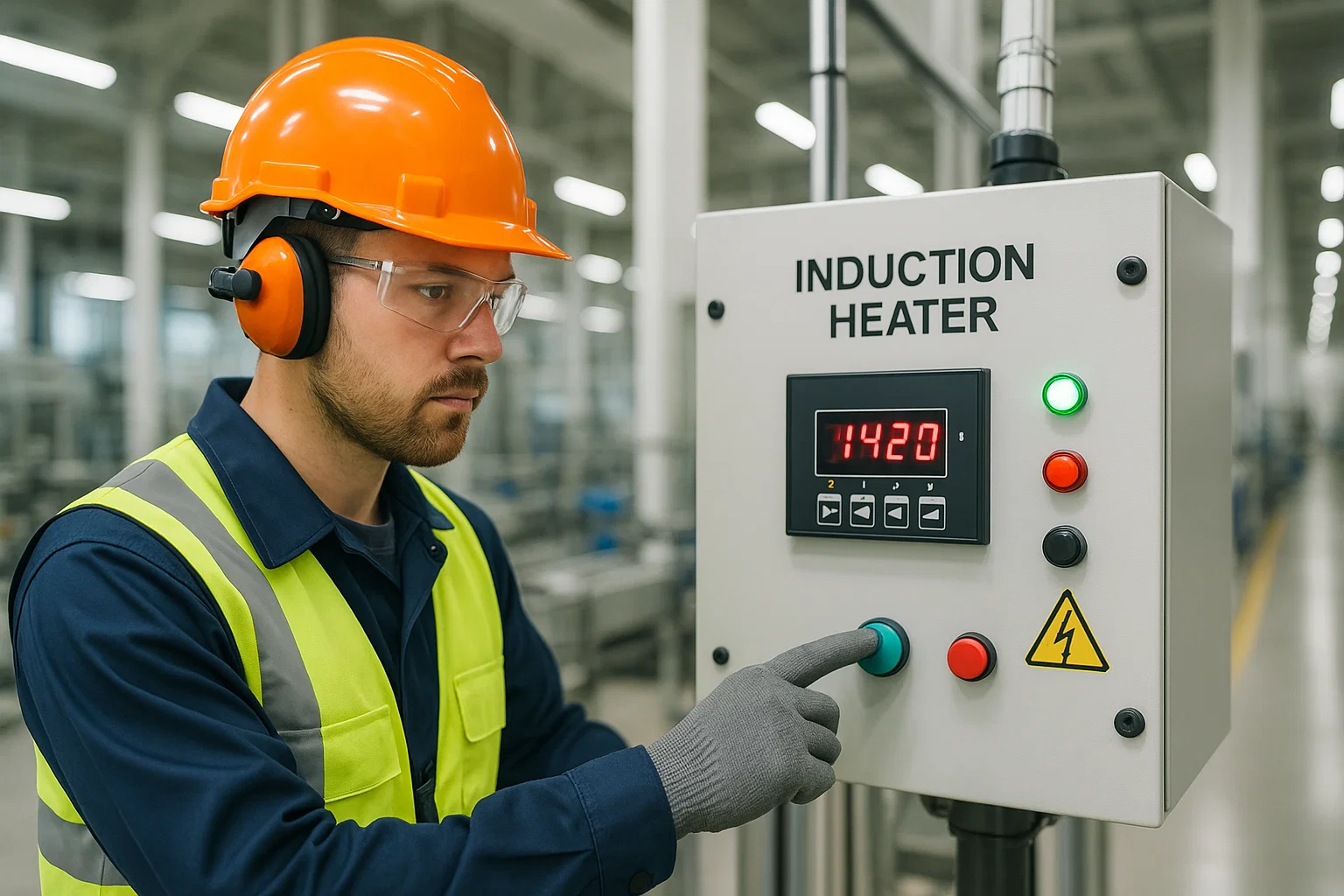
Glove-friendly controls with larger buttons and switches
Voice or visual indicators supplementing tactile feedback when wearing hearing protection
For applications where an open-flame alternative is still in use, it’s worth noting that induction heating removes several PPE and permitting burdens entirely — see Induction Heater vs Gas Torch: Which Is Better? for the full safety comparison.
Advanced Safety Technologies
Leading induction heating manufacturers incorporate sophisticated safety technologies that provide additional protection layers.
Intelligent Power Management
Modern systems feature microprocessor-controlled power delivery that:
Monitors load impedance, continuously adjusting output to prevent overheating
Detects abnormal conditions such as missing workpieces or improper coil positioning
Provides predictive maintenance alerts before components fail
Logs safety events for compliance documentation and analysis
Remote Monitoring and Diagnostics
Connected induction heaters enable:
Real-time safety status monitoring from centralized control rooms
Automatic notifications when safety thresholds are approached
Remote shutdown capabilities for emergency situations
Historical data analysis identifying patterns that could indicate developing safety issues
When selecting the best induction heater for industrial applications, prioritize models offering these advanced monitoring capabilities.
Similar standards to UL but with specific Canadian requirements
IEC 60519 Compliance — the core electroheat safety standard
IEC 60519-1: general safety requirements for electroheat installations, covering protection against electrical hazards across arc furnaces, induction furnaces, and resistance heating equipment
IEC 60519-3: particular requirements specific to induction and conduction heating, and induction melting installations — this is the part directly applicable to induction heaters used for bearing, bushing, and shaft heating
Industry-Specific Standards
Depending on your application, additional certifications may be necessary:
ATEX certification for explosive atmospheres
FDA compliance for medical or food-related applications
OSHA requirements for workplace safety in the United States
ISO 45001 occupational health and safety management system compliance
NFPA 70E for electrical safety work practices where induction heating equipment is serviced live or near-live
Industry-Specific Safety Requirements
Different industries have unique safety considerations when implementing induction heating technology.
Portable safety features including stable bases and secure transport mechanisms
Battery backup for emergency shutdown in field applications without stable power
Weather protection for outdoor use while maintaining safety functionality
Maintenance and Safety Compliance
Safety features remain effective only when properly maintained and tested according to manufacturer specifications.
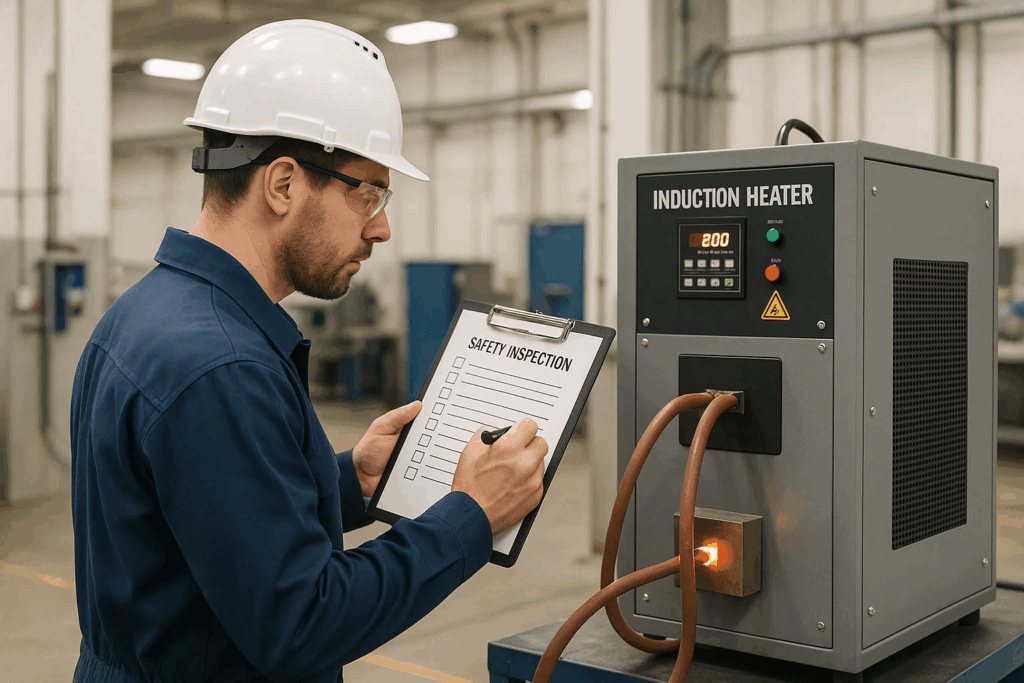
Regular Safety Inspections
Daily Checks:
Emergency stop button functionality
Cooling system operation
Visual inspection for damaged cables or connections
Verification of safety labels and warnings
Monthly Reviews:
Thermal protection system testing
Electrical insulation testing
EMF measurements around work areas
Safety interlock verification
Annual Certification:
Complete electrical safety testing by qualified technicians
Calibration of temperature sensors and safety circuits
Documentation review and compliance audits
Operator safety training refreshers
Documentation and Record-Keeping
Maintain detailed records including:
Equipment installation and commissioning reports
Safety system test results and calibration certificates
Incident reports and corrective actions
Operator training completion and competency assessments
Manufacturer service bulletins and safety updates
Operator Training Requirements
Comprehensive safety training should cover:
Electromagnetic field awareness and medical device precautions
Emergency response procedures including proper use of emergency stops
Recognition of abnormal conditions such as unusual sounds, odors, or visual indicators
Personal protective equipment selection and proper use
Lockout/tagout procedures for maintenance activities (OSHA 1910.147 or equivalent national standard)
Frequently Asked Questions
What is the most important safety feature in an induction heater?
The automatic thermal shutdown system is the most critical safety feature. This mechanism continuously monitors temperature levels and immediately cuts power when overheating is detected, preventing equipment damage, fire hazards, and operator injuries. However, comprehensive safety requires multiple protection layers including electrical safeguards, emergency stops, and proper EMF shielding working together.
How do I know if an induction heater is safe to use?
Verify that your induction heater carries recognized safety certifications such as UL, CE, or CSA markings on the equipment nameplate, along with IEC 60519-1/60519-3 compliance. Additionally, ensure all safety features are functioning properly through regular testing, check that emergency stop buttons respond immediately, confirm cooling systems operate correctly, and maintain up-to-date maintenance records. Never use equipment with damaged cables, missing guards, or malfunctioning safety indicators.
Can induction heaters cause harm to people with pacemakers or other medical devices?
Yes, the strong electromagnetic fields generated by induction heaters can interfere with pacemakers, implanted defibrillators, and other electronic medical devices. Individuals with such devices should maintain safe distances (typically 3–6 feet minimum) from operating induction heating equipment or avoid these work areas entirely. Employers must post clear warning signs and conduct EMF assessments against ICNIRP/EU 2013/35/EU reference levels to identify safe zones. Always consult with medical professionals and equipment manufacturers for specific guidance.
How often should safety features be tested on an induction heater?
Safety testing should follow a tiered schedule: perform daily checks of emergency stops, cooling systems, and visual inspections; conduct monthly testing of thermal protection systems, electrical insulation, and safety interlocks; and complete annual comprehensive safety audits by qualified technicians including calibration, certification, and full electrical testing. Document all testing in maintenance logs for compliance purposes.
Are there different safety requirements for portable versus stationary induction heaters?
Yes, portable induction heaters require additional safety considerations including stable bases to prevent tipping, secure cable management systems to avoid trip hazards, battery backup for emergency shutdown in field locations, weather-resistant enclosures for outdoor use, and enhanced operator training for varied work environments. Stationary systems benefit from permanent safety installations like fixed guards, integrated ventilation, and hardwired emergency stops, but both types must meet the same fundamental safety standards.
Conclusion
Selecting an induction heater with comprehensive safety features protects your most valuable assets — your employees — while safeguarding your equipment investment and maintaining operational continuity. Non-negotiable safety features include automatic thermal protection, electrical safety mechanisms, emergency stop functionality, proper EMF shielding, and relevant safety certifications.
✅ Key Takeaways
Prioritize thermal protection systems with automatic shutdown and multiple temperature monitoring points
Verify electrical safety features including ground fault protection, circuit isolation, and emergency stops (ISO 13850)
Confirm safety certifications from recognized organizations — UL, CE, CSA, and IEC 60519-1/60519-3 — appropriate for your region
Assess EMF exposure against ICNIRP reference levels and, in the EU, Directive 2013/35/EU action levels
Choose industry-appropriate features matching your specific application requirements
Implement maintenance protocols — daily, monthly, annual — ensuring safety systems remain functional throughout equipment life
Invest in comprehensive training empowering operators to work safely and recognize potential hazards
When evaluating induction heating equipment, remember that safety features are investments, not expenses. Choose manufacturers who demonstrate commitment to safety through robust design, proper certifications, and comprehensive documentation.
Your decision to prioritize safety features today creates a secure working environment that protects lives, reduces liability, and ensures reliable operation for years to come. Never compromise on safety — your team depends on it.
Ready to Choose a Safer Induction Heating System for Your Facility?
Don’t compromise on safety when selecting induction heating equipment. Ensure your system is built with certified protection features that safeguard your operators, equipment, and production environment while delivering consistent industrial performance.
🛡️ Explore induction heaters with advanced safety and thermal protection systems ⚙️ Get expert guidance on selecting the right industrial heating solution 📊 Ensure compliance with global safety standards (UL, CE, IEC 60519)